

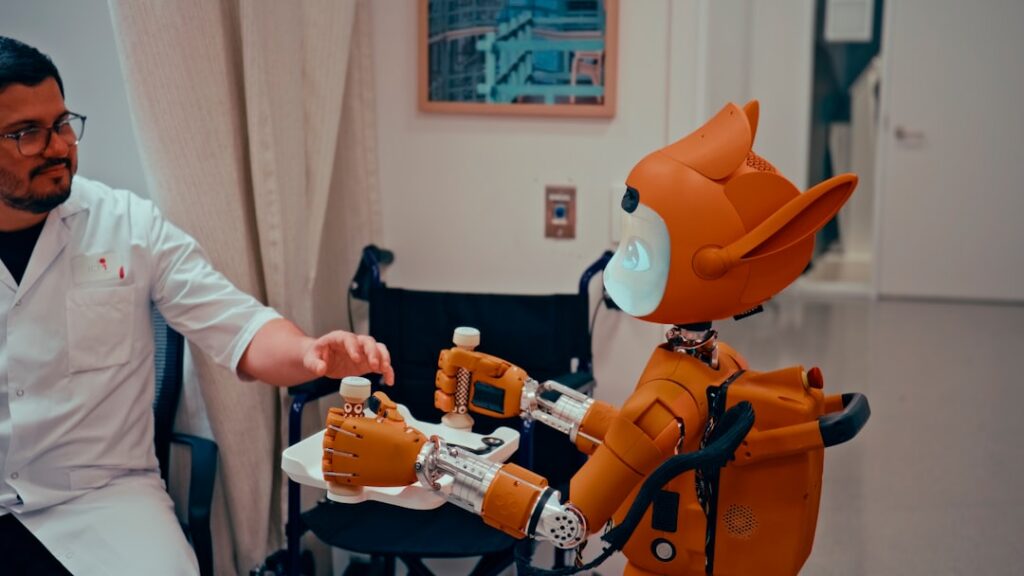
The field of robotics has undergone a significant transformation, particularly in its capacity for dexterous manipulation. This evolution, often termed the “Robotics Revolution,” has shifted robotics from simple, repetitive tasks to complex, human-like interactions with the physical world. This article explores the historical trajectory, key technological advancements, and the multifaceted implications of this revolution in dexterous manipulation.
The earliest forms of robotic manipulation were rudimentary, designed for tasks requiring strength, precision in repetitive motion, or operation in hazardous environments, not dexterity. These systems laid the foundational principles for subsequent innovations.
Industrial Robotics: Repetitive Tasks
The initial widespread adoption of robots occurred in industrial settings, particularly in manufacturing. These robots, often large and stationary, were programmed for highly specific tasks such as welding, painting, and assembly line operations.
- Fixed Automation: Early industrial robots were primarily fixed automation systems. Their movements were predefined and sequential, with little to no adaptability to variations in their environment or workpiece. This approach was highly efficient for mass production of identical items.
- Pick-and-Place Operations: A common application was pick-and-place, where robots would grasp an object from one location and transfer it to another. While seemingly simple, this required robust gripping mechanisms and precise positioning. The Puma robot, developed by Unimation, is a notable example of a versatile industrial manipulator of this era.
Limited Sensing and Control
Early robotic systems predominantly relied on open-loop control, where commands were executed without real-time feedback from the environment. This necessitated highly structured environments and precise positioning of workpieces.
- Lack of Feedback: Without sensors providing information about force, touch, or proximity, these robots operated “blindly.” Any deviation from the expected scenario could lead to errors or system shutdowns.
- Pre-programmed Paths: Robot trajectories were meticulously pre-programmed, often through teach pendants or offline programming software. This limited their ability to adapt to unforeseen circumstances or variations in the manufacturing process.
In exploring the advancements in robotic dexterity, a related article that delves into the broader implications of robotics in our daily lives is available at BrainNG. This article discusses the transformative impact of robotics on various industries, highlighting how innovations in manipulation techniques are paving the way for more sophisticated and versatile robotic systems. As we witness the Robotics Revolution, understanding these interconnected developments is essential for grasping the future of automation and its role in society.
The Kinematic Leap: Beyond Repetition
The evolution of dexterous manipulation began with advancements in robotic kinematics and control, allowing for more complex and fluid movements. This period saw a shift from purely functional, rigid movements to more adaptable and intricate actions.
Increased Degrees of Freedom
One of the most significant developments was the increase in the number of degrees of freedom (DoF) in robotic arms. Early industrial robots often had 3-4 DoF, restricting their reach and orientation. Modern dexterous manipulators commonly feature 6 or more DoF, mimicking the human arm’s versatility.
- Redundancy: Robots with more DoF than strictly necessary for a task are considered redundant. This redundancy allows for obstacle avoidance, optimized joint configurations, and improved dexterity, similar to how a human can reach for an object in multiple ways.
- Kinematic Chains: Understanding and controlling these complex kinematic chains became a central challenge. Researchers developed increasingly sophisticated algorithms for inverse kinematics, allowing engineers to specify desired end-effector positions and orientations, and the robot to calculate the necessary joint angles.
Advanced Control Architectures
The move from open-loop to closed-loop control, incorporating sensor feedback, was transformative. This allowed robots to react to their environment in real-time, greatly enhancing their flexibility and robustness.
- Force Control: The ability to sense and control forces applied by the robot’s end-effector marked a critical step. This enabled tasks requiring delicate handling, insertion, or assembly where excessive force could cause damage. Force-torque sensors became integral components of dexterous manipulators.
- Impedance Control: This control strategy allows a robot to react to external forces in a compliant manner, mimicking the behavior of a spring and damper. This is particularly useful in human-robot collaboration or tasks requiring interaction with deformable objects.
The Sensory Renaissance: Perceiving the Environment
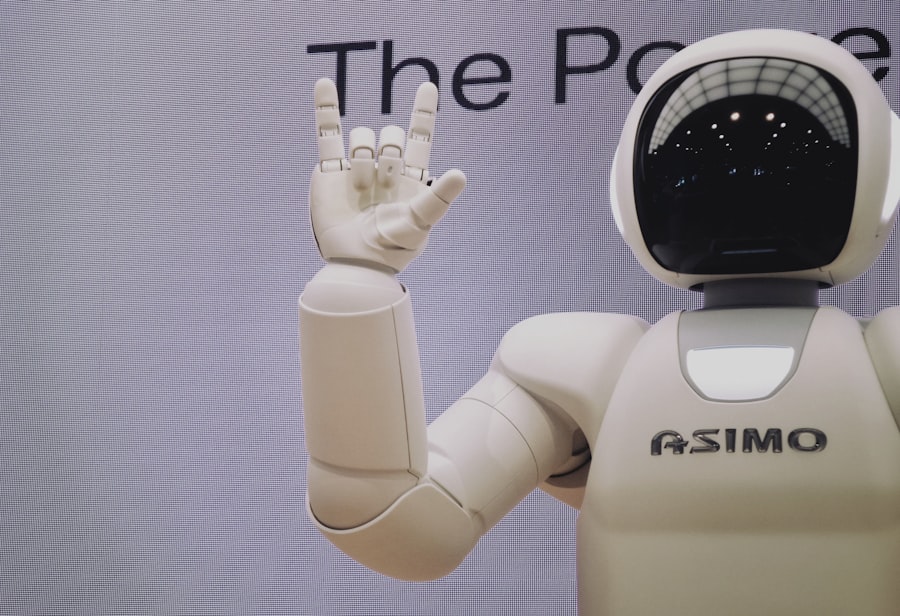
True dexterity necessitates an accurate and comprehensive understanding of the surrounding environment. The integration of advanced sensing technologies has been a cornerstone of the robotics revolution.
Vision Systems: The Eyes of the Robot
Machine vision has evolved from simple presence/absence detection to sophisticated 3D environmental mapping and object recognition. This has enabled robots to identify, locate, and manipulate objects with varying shapes and orientations.
- 2D vs. 3D Vision: While 2D vision provides information in a planar view, 3D vision systems (e.g., stereo cameras, structured light, time-of-flight sensors) provide depth information, crucial for grasping and navigating complex scenes.
- Object Recognition and Pose Estimation: Sophisticated algorithms, often employing machine learning, allow robots to identify objects from a database and determine their precise position and orientation in space, which is essential for successful manipulation.
Tactile Sensing: The Sense of Touch
Tactile feedback is critical for fine manipulation, object differentiation, and robust gripping. The development of advanced tactile sensors has allowed robots to “feel” their environment.
- Pressure and Force Distribution: Tactile sensors, often embedded in robotic fingertips or grippers, provide information about contact pressure and its distribution. This allows robots to adjust their grip to prevent slipping or crushing fragile objects.
- Slip Detection: The ability to detect incipient slip is a key aspect of dexterous manipulation. By sensing minute movements of an object within the gripper, robots can quickly adjust their grip force to maintain control.
Proprioception and Exteroception
Robots possess two primary categories of sensors: proprioceptive and exteroceptive. Proprioceptive sensors provide information about the robot’s internal state (e.g., joint angles, motor currents), while exteroceptive sensors provide information about the external environment. The fusion of data from both types of sensors is fundamental for dexterous actions.
- Multi-Sensor Fusion: Combining data from different sensor modalities (e.g., vision, force, tactile) creates a more complete and robust understanding of the environment than any single sensor could provide. This redundancy can also enhance reliability.
The Gripper Dilemma: Emulating the Human Hand

One of the greatest challenges in achieving dexterous manipulation has been the design of end-effectors, or grippers, that can replicate the versatility of the human hand.
From Jaws to Multi-Fingered Hands
Early grippers were often binary, open-and-close mechanisms. The development of multi-fingered robot hands, capable of conforming to object shapes and performing prehension, marked a significant leap.
- Parallel Jaw Grippers: These are the most common type of industrial gripper, suitable for objects with flat or parallel surfaces. While robust, their versatility is limited.
- Underactuated Hands: These hands feature fewer actuators than degrees of freedom, using mechanical linkages or compliant elements to conform to object shapes. This simplifies control while offering improved adaptability.
- Fully Actuated Hands: These hands have an actuator for each joint, offering the highest degree of control and dexterity, but at the cost of increased complexity and weight. Examples include the Shadow Hand or the DLR Hand.
Material Science and Compliance
The materials used in gripper construction and the incorporation of compliant elements have also played a crucial role in enhancing dexterity.
- Soft Robotics: The advent of soft robotics, utilizing deformable materials, has opened new avenues for grasping fragile or irregularly shaped objects. These grippers can conform to objects without requiring precise sensing and control.
- Adhesive Grippers: Inspired by biological examples (e.g., gecko feet), adhesive grippers use principles of van der Waals forces or electroadhesion to grasp objects without applying crushing pressure.
In exploring the advancements in robotics, particularly in the realm of dexterous manipulation, one can gain further insights from a related article that delves into the practical applications of these technologies. This article highlights how innovations in robotic hands and grippers are transforming industries by enhancing precision and efficiency. For a deeper understanding of these developments, you can read more about it in this insightful piece on robotic applications.
The Intelligence Infusion: Learning and Adaptability
| Year | Key Development | Dexterity Metric | Application Area | Notable Robot |
|---|---|---|---|---|
| 1980 | Introduction of basic robotic grippers | Degrees of Freedom (DoF): 2-3 | Industrial assembly | Unimate |
| 1995 | Development of multi-fingered robotic hands | DoF: 5-7; Grip Force: 10-20 N | Precision manufacturing | Shadow Hand (early prototype) |
| 2010 | Integration of tactile sensors and force feedback | DoF: 15-20; Tactile Resolution: 1 mm² | Medical robotics, prosthetics | Robonaut 2 |
| 2020 | AI-driven manipulation and adaptive control | DoF: 20+; Grip Force: 50+ N; Precision: ±0.1 mm | Logistics, service robots | OpenAI Dactyl |
| 2024 | Soft robotics and bio-inspired manipulation | DoF: Variable; Compliance: High; Sensory Feedback: Multi-modal | Delicate object handling, agriculture | SoftHand Pro |
The most recent phase of the robotics revolution is characterized by the assimilation of artificial intelligence and machine learning, enabling robots to learn, adapt, and perform tasks with greater autonomy.
Machine Learning for Manipulation
Machine learning techniques, particularly deep learning, are transforming how robots acquire and refine manipulation skills. This moves beyond traditional, explicit programming.
- Reinforcement Learning: Robots can learn manipulation policies through trial and error, optimizing their actions based on reward signals. This has shown promise in tasks like complex assembly, pouring, and even opening doors.
- Learning from Demonstration (LfD): Robots can learn new skills by observing human demonstrations. This significantly simplifies the programming of complex tasks, as it reduces the need for explicit coding.
- Sim-to-Real Transfer: Training manipulation policies in simulation, then transferring them to real-world robots, is a growing area. This allows for rapid iteration and data collection without risking damage to physical hardware.
Human-Robot Collaboration (HRC)
The ability for robots to dexterously manipulate objects opens new possibilities for genuine collaboration with humans, moving beyond simple co-existence.
- Shared Workspaces: Dexterous robots can operate safely and effectively in shared workspaces with humans, performing tasks that require fine motor skills alongside human operators.
- Intuitive Interfaces: The development of intuitive control interfaces, often leveraging augmented or virtual reality, allows humans to more easily program and guide dexterous robots, even without deep robotics expertise.
- Adaptive Behavior: Robots capable of dexterous manipulation can adapt their actions based on human cues, intentions, and even unexpected movements, leading to more natural and efficient collaborative workflows.
The Future Landscape: Dexterous Autonomy
The ongoing evolution of dexterous manipulation is poised to reshape various sectors, ushering in an era of more capable and autonomous robotic systems.
Healthcare and Service Robotics
Dexterous robots have significant potential in healthcare, from assisting in surgery to providing care for the elderly. In service industries, they could automate tasks requiring fine motor skills.
- Surgical Assistance: Robots with high dexterity and precision can augment human surgeons, performing intricate procedures with superhuman steadiness.
- Assisted Living: Dexterous robots could help individuals with disabilities or the elderly with daily tasks, such as dressing, eating, or retrieving objects, enhancing their independence.
Logistics and Assembly
While logistics has long utilized robots, dexterous manipulation will enable automated handling of a wider variety of items, improving efficiency in warehousing and bespoke manufacturing.
- Automated Kitting: Robots could pick and sort a diverse range of components for specific kits or orders, a task currently often performed manually.
- Flexible Manufacturing: Dexterous robots can quickly reconfigure for different assembly tasks, supporting the shift towards highly customizable and small-batch production.
Exploration and Hazardous Environments
In environments too dangerous or remote for humans, dexterous robots can perform complex inspection, repair, and sample collection tasks.
- Space Exploration: Robots with advanced manipulation capabilities could conduct scientific experiments, perform maintenance, and even build structures on other planets or in orbit.
- Disaster Response: In disaster zones, dexterous robots could navigate debris, identify survivors, and mitigate hazards, operating where human intervention would be too risky.
The journey of dexterous manipulation in robotics is far from over. As researchers continue to push the boundaries of sensing, actuation, control, and artificial intelligence, the capabilities of robots will increasingly blur the line between mechanical precision and human-like skill, fundamentally altering our interaction with technology and the physical world.