


The integration of collaborative robots (cobots) into smart manufacturing represents a significant shift in industrial automation. This article explores the evolving role of cobots, their technological underpinnings, and their impact on production processes, workforce dynamics, and the broader manufacturing landscape. We will examine the challenges and opportunities presented by this revolution, providing an objective overview of a transformative technology.
Industrial robotics has undergone several phases of development, each marked by advancements in capability and autonomy. Understanding this lineage is crucial for appreciating the distinct characteristics of collaborative robots.
Early Industrial Robots: Automation’s Iron Fist
The first wave of industrial robots, emerging in the mid-20th century, were largely designed for repetitive, high-volume tasks in controlled environments. These “iron fists” of automation excelled at welding, painting, and material handling, operating behind protective barriers due to their speed and power. Their programming was often complex and their integration required substantial retooling of production lines. The focus was on maximizing throughput and minimizing human intervention in hazardous or monotonous tasks.
Advanced Industrial Robots: Precision and Speed
Subsequent generations of industrial robots brought increased precision, speed, and payload capacity. Advances in sensors, control systems, and programming languages allowed for more complex movements and adaptive behaviors. These robots tackled more intricate assembly tasks and could handle a wider variety of parts. However, the fundamental barrier between human and machine remained, necessitating safety precautions that limited direct interaction.
The Rise of Collaborative Robots: A New Paradigm
Collaborative robots signify a departure from earlier models. Designed to work alongside human operators without traditional safety cages, cobots represent a paradigm shift. Their inherent safety features, intuitive programming, and adaptability position them as key enablers of flexible and efficient manufacturing. This new generation aims to augment human capabilities rather than simply replace them.
In exploring the advancements in smart manufacturing, the article “Robotics Revolution: Collaborative Robots in Smart Manufacturing” highlights the transformative impact of collaborative robots, or cobots, in modern production environments. For further insights into the implications of robotics in various industries, you can refer to a related article that discusses warranty management and its significance in maintaining robotic systems. This can be found at this link.
Defining Collaborative Robots and Their Capabilities
Collaborative robots are distinguished by specific safety features and operational characteristics that enable human-robot interaction within a shared workspace. Their design emphasizes immediate safety and user-friendliness, fostering a new level of integration on the factory floor.
Safety Features and Standards
The defining characteristic of cobots is their inherent safety. This is achieved through various mechanisms, including:
- Power and Force Limiting: Cobots are designed to operate within limits of power and force, reducing the risk of injury upon contact. They can detect abnormal forces and stop or slow down their movements accordingly.
- Safety-Rated Monitored Stop: When a human enters a designated workspace, the cobot can detect their presence and halt its motion, restarting only when the human has moved away.
- Hand Guiding: Operators can manually guide the cobot’s arm to teach it new tasks or fine-tune movements, facilitating intuitive programming and rapid deployment.
- Speed and Separation Monitoring: Cobots can adjust their speed based on the proximity of human workers, maintaining a safe separation distance. As humans approach, the cobot slows down or stops.
These features adhere to international safety standards such as ISO 10218-1 and ISO/TS 15066, which provide guidelines for the safe design and application of collaborative industrial robots. Compliance with these standards is critical for the safe deployment of cobots in shared workspaces.
Programming and Versatility
Cobots are designed for ease of programming, often employing intuitive interfaces that do not require extensive robotics expertise. This accessibility contributes to their rapid adoption.
- Teach Pendant Programming: Many cobots are programmed using a teach pendant, a handheld device with a graphical user interface where operators can input commands, define waypoints, and set parameters.
- Lead-Through Programming: This method, also known as hand-guiding, allows operators to physically move the cobot’s arm through the desired sequence of motions. The cobot records these movements, making programming highly intuitive for repetitive tasks.
- Graphical User Interfaces: Software interfaces often employ drag-and-drop functionality and visual programming tools, simplifying the creation and modification of robot programs.
- Modular End-Effectors: Cobots can be equipped with a wide range of end-effectors, such as grippers, vacuum cups, and screwdrivers, making them highly versatile for different applications, from assembly and inspection to pick-and-place and packaging.
This versatility allows cobots to adapt to changing production requirements and support rapid line reconfigurations, a hallmark of smart manufacturing.
Collaborative Robots in Smart Manufacturing
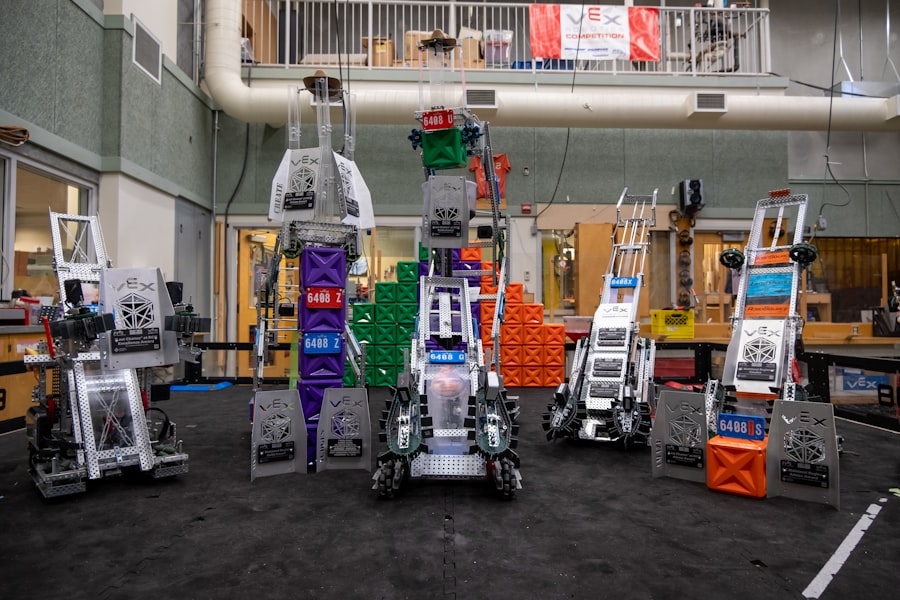
Smart manufacturing integrates advanced technologies to optimize production processes, enhance efficiency, and improve responsiveness. Collaborative robots are a cornerstone of this paradigm, acting as flexible tools that bridge the gap between traditional automation and human-centric production.
Bridging the Automation Gap
For many small and medium-sized enterprises (SMEs), traditional industrial robots have been cost-prohibitive or too complex to integrate. Cobots, with their lower cost, smaller footprint, and easier programming, “bridge the automation gap,” making automation accessible to a wider range of manufacturers. They enable companies to automate specific, often ergonomically challenging or repetitive tasks, without overhauling entire production lines. This incremental approach to automation helps maintain human expertise where it is most valuable, while relieving humans of undesirable duties.
Enhancing Production Flexibility and Agility
The ability of cobots to adapt quickly to new tasks and work alongside humans directly contributes to manufacturing flexibility and agility. In an environment where product lifecycles are shortening and customization is increasing, this adaptability is paramount.
- Rapid Re-tasking: Cobots can be quickly reprogrammed and redeployed to different tasks or production lines, facilitating rapid changeovers and accommodating fluctuating demand. This contrasts sharply with traditional robots that often require extensive re-engineering for new applications.
- Co-assembly with Humans: In complex assembly operations, cobots can perform repetitive or heavy lifting tasks, while human workers handle intricate components or quality checks. This division of labor optimizes both speed and accuracy. Imagine a human and a cobot working together on a complex product, one providing precision, the other providing strength, much like two skilled artisans collaborating on a masterpiece.
- Small Batch Production: Cobots are well-suited for high-mix, low-volume production environments, where frequent product changes make fixed automation impractical. Their flexibility allows manufacturers to produce customized goods efficiently.
Improving Ergonomics and Worker Safety
One of the often-overlooked benefits of cobot integration is the improvement in workplace ergonomics and safety. Cobots can take over tasks that are repetitive, physically demanding, or dangerous for human workers.
- Reducing Repetitive Strain Injuries: Tasks involving repetitive motions, such as tightening screws or picking small parts, can lead to musculoskeletal disorders. Cobots can perform these tasks consistently, preserving human workers from injury.
- Assisting with Heavy Lifting: Cobots can handle heavy or awkwardly shaped objects, reducing the risk of back injuries and other strains for human operators. This effectively turns the cobot into a strong, silent partner that takes the strain.
- Eliminating Exposure to Hazardous Environments: In some industries, cobots can perform tasks in environments with high temperatures, dangerous chemicals, or poor air quality, thus protecting human health.
Challenges and Considerations for Adoption

While collaborative robots offer significant advantages, their successful integration requires careful planning and addressing specific challenges. It is not merely a matter of purchasing a robot; it is about redesigning workflows and integrating a new team member.
Integration Complexity and Cost
Despite their ease of use, integrating cobots into existing manufacturing environments can present challenges.
- Interfacing with Legacy Systems: Older machinery and IT infrastructure may not be readily compatible with modern cobot systems, requiring custom integration solutions or upgrades.
- Programming for Complex Tasks: While basic tasks are easy to program, more complex applications requiring adaptive behaviors or advanced vision systems can still demand specialized expertise.
- Initial Investment: Although generally less expensive than traditional industrial robots, the initial investment in cobots, end-effectors, and integration services can be a barrier for some smaller businesses. The return on investment must be clearly defined.
Workforce Adaptation and Training
The introduction of cobots necessitates a significant shift in the roles and skills required of the human workforce.
- Skill Gaps: Workers may require training in cobot operation, programming, troubleshooting, and maintenance. This requires an investment in upskilling the existing workforce rather than simply replacing it.
- Job Redesign: Rather than eliminating jobs, cobots often change job descriptions. Human workers may transition from performing repetitive tasks to supervising cobots, analyzing production data, or focusing on higher-value activities like product design or quality control. This is a move from task execution to oversight and problem-solving.
- Psychological Acceptance: Some workers may initially harbor concerns about job displacement or adapting to new technologies. Clear communication, training, and demonstrating the benefits of cobot collaboration are crucial for fostering positive acceptance.
Safety Protocol Beyond the Robot
While cobots are intrinsically safe, a comprehensive safety strategy extends beyond the robot itself to encompass the entire workstation and human-robot interaction.
- Risk Assessment: A thorough risk assessment is essential to identify potential hazards in the shared workspace, considering factors such as the speed of human movement, the type of end-effector, and environmental conditions.
- Workstation Design: The physical layout of the workstation needs to be optimized for collaborative operations, ensuring clear pathways, adequate lighting, and designated zones for both human and cobot activities.
- Ongoing Monitoring: Continuous monitoring of the collaborative workspace is necessary to ensure that safety protocols are being followed and to identify any evolving risks. Regular maintenance and calibration of the cobot’s safety systems are also critical.
The advancements in robotics have significantly transformed the landscape of manufacturing, particularly with the rise of collaborative robots. For a deeper understanding of how these innovations are shaping the industry, you can explore a related article that delves into the impact of automation on productivity and workforce dynamics. This insightful piece can be found at this link, where you will discover how smart manufacturing is evolving through the integration of collaborative robots.
The Future of Collaborative Robotics in Manufacturing
| Metric | Description | Value / Data | Impact on Smart Manufacturing |
|---|---|---|---|
| Market Growth Rate | Annual growth rate of collaborative robots in manufacturing | 23% CAGR (2020-2025) | Rapid adoption driving innovation and efficiency |
| Deployment Scale | Number of collaborative robots installed worldwide | ~50,000 units (2023) | Increased automation in small and medium enterprises |
| Average ROI Time | Time to achieve return on investment for cobot integration | 6-12 months | Faster payback encourages wider adoption |
| Safety Incidents | Reported safety incidents involving collaborative robots | Enhanced safety features reduce workplace accidents | |
| Productivity Increase | Improvement in manufacturing output after cobot integration | 20-30% increase | Boosts throughput and operational efficiency |
| Human-Robot Collaboration Time | Percentage of tasks performed collaboratively | 40% of assembly tasks | Optimizes human skills and robot precision |
| Cost Reduction | Reduction in labor and operational costs | 15-25% | Improves profitability and competitiveness |
| Integration Flexibility | Time required to reprogram or redeploy cobots | Less than 1 hour | Enables agile manufacturing and quick changeovers |
The trajectory of collaborative robotics indicates continued growth and increasing sophistication. As the technology matures, we can anticipate more seamless integration and broader applications across diverse industries.
Advanced Sensor Integration and AI
The future of cobots will be heavily influenced by advancements in sensor technology and artificial intelligence.
- Enhanced Perception: Improved vision systems, force sensors, and tactile sensors will allow cobots to perceive their environment with greater detail and react more intelligently to unexpected events. Imagine a cobot that can not only “see” a component but also “feel” its texture and orientation, adapting its grasp accordingly.
- Adaptive Learning: AI-driven algorithms will enable cobots to learn from human demonstrations, adapt to variations in tasks, and even predict potential issues, moving beyond pre-programmed instructions to genuine machine intelligence. This will make cobots more autonomous and less reliant on constant human supervision.
- Human-Robot Interface Improvements: Natural language processing and advanced gesture recognition will make interacting with cobots more intuitive, potentially allowing workers to communicate with robots using speech or hand movements, further blurring the lines between human and machine operation.
Broader Adoption and Sector-Specific Applications
As cobot technology becomes more refined and cost-effective, its adoption will expand beyond traditional manufacturing into new sectors.
- Logistics and Warehousing: Cobots are already being used for pick-and-place operations and material handling in warehouses. Future applications will involve more complex navigation, inventory management, and even drone-cobot collaboration for rapid-response fulfillment.
- Healthcare: In healthcare, cobots could assist with repetitive laboratory tasks, dispense medication, or even aid in patient rehabilitation, taking on functions that require precision and consistency.
- Food Processing: With stringent hygiene requirements, cobots designed for food-grade environments could perform tasks such as sorting, packaging, and quality inspection, reducing human contamination and increasing efficiency.
- Construction: While challenging due to unstructured environments, cobots could contribute to certain construction tasks, such as repetitive drilling, bricklaying, or material transport, improving safety and precision.
The Human-Centric Factory
Ultimately, the robotics revolution driven by collaborative robots points towards a more human-centric factory. Rather than replacing humans, cobots serve as intelligent tools that amplify human capabilities, creating more engaging, safer, and productive work environments. The factory of the future will be less about humans serving machines and more about humans and machines collaborating to achieve common goals, each contributing their unique strengths. This involves a shift from purely mechanistic efficiency to socio-technical systems that prioritize both productivity and human well-being.
The integration of collaborative robots is not merely a technological upgrade; it is a fundamental rethinking of how production is organized and how humans and machines can best interact. Manufacturers who embrace this shift stand to gain significant advantages in efficiency, flexibility, and competitiveness.