


Waste management, a long-standing challenge for societies globally, is undergoing a significant transformation. This evolution is driven by the integration of technology, particularly what can be termed “sustainable tech solutions.” These innovations are not merely incremental improvements; they represent a paradigm shift in how we perceive and handle waste, moving from a reactive disposal model to a proactive, resource-centric approach. The underlying principle is to leverage intelligent systems to optimize every stage of the waste lifecycle, from collection and sorting to processing and end-of-life management. This article will explore the ways smart technology is revolutionizing waste management, examining specific applications, their benefits, and the ongoing development in this critical field.
For decades, the dominant approach to waste management has been characterized by landfilling and incineration, with limited emphasis on resource recovery. This model, while seemingly straightforward, carries substantial environmental and economic costs. Landfills occupy significant land areas, can contaminate soil and groundwater through leachate, and generate potent greenhouse gases like methane. Incineration, while reducing waste volume, can release air pollutants if not equipped with advanced emission control systems, and often represents a lost opportunity to reclaim valuable materials. Furthermore, the logistics of collection have historically been inefficient, relying on fixed routes and schedules that do not adapt to real-time waste generation patterns. This outdated system is akin to sailing a ship without a compass or a modern navigation system, relying on established but often suboptimal routes.
The Challenges of Current Systems
Several inherent drawbacks plague traditional waste management:
Inefficient Collection Routes
Municipal waste collection services are often designed with predictable routes and schedules, which fail to account for the fluctuating, non-uniform distribution of waste across geographic areas. This leads to:
- Wasted Fuel and Emissions: Trucks traverse routes even when bins are not full, consuming unnecessary fuel and contributing to air pollution and greenhouse gas emissions.
- Over-Collection and Under-Collection: Some areas may be serviced more frequently than needed, while others might experience delays, leading to overflowing bins or less efficient resource allocation.
- Increased Labor Costs: Drivers and collection crews spend time on routes that could be optimized, impacting operational efficiency and overall expense.
Limited Sorting and Recycling Capabilities
The effectiveness of recycling programs hinges on accurate sorting of waste materials. Traditional methods often suffer from:
- Manual Sorting Inefficiencies: Human sorters, while important, can be prone to errors, leading to contamination of recyclable streams and reduced material quality. This contamination can render entire batches of recyclables unusable.
- Low Material Purity: The presence of non-recyclable items mixed with recyclables significantly diminishes the value of the recovered materials, making the recycling process economically less viable.
- Limited Scope of Recoverable Materials: Many advanced sorting technologies can identify and separate a wider range of materials, including complex plastics and electronic components, which are often lost in less sophisticated systems.
Environmental Repercussions of Disposal
The primary methods of waste disposal present significant environmental concerns:
- Landfill Impacts: Landfills are a major source of methane, a greenhouse gas with a potent warming effect. The decomposition of organic waste in anaerobic conditions within landfills is the primary driver of this emission. Furthermore, leachate, a toxic liquid formed when rainwater percolates through waste, can contaminate surrounding soil and groundwater, posing risks to ecosystems and human health.
- Incineration Emissions: While modern incinerators employ advanced pollution control technologies, older or less-regulated facilities can release particulate matter, heavy metals, and dioxins into the atmosphere, impacting air quality and potentially leading to respiratory and other health problems. Even with stringent controls, a portion of the waste’s inherent material value is lost as heat energy.
Economic Drain of Unprocessed Waste
The failure to recover valuable resources from waste represents a significant economic opportunity cost:
- Lost Resource Value: Many discarded items, such as metals, plastics, and paper, have intrinsic economic value and can be reprocessed into new products, reducing the need for virgin material extraction.
- High Disposal Costs: Landfilling and incineration incur significant operational costs, including transportation, tipping fees, and ongoing environmental monitoring and maintenance. These costs are often borne by taxpayers.
- Lack of Circular Economy Integration: Traditional models are linear (take-make-dispose) rather than circular, failing to reintegrate materials back into the production cycle. This perpetuates dependence on raw material extraction, which is often resource-intensive and environmentally damaging.
In the quest for innovative approaches to environmental challenges, the article “Sustainable Tech Solutions: Revolutionizing Waste Management through Smart Tech” highlights the transformative potential of technology in waste management systems. For further insights on the intersection of sustainability and technology, you can explore a related article on cookie policies that discusses the importance of responsible data management in the digital age. This article can be found at this link.
The Rise of Smart Technology in Waste Collection
The modernization of waste collection is a prime example of how smart technology can dramatically improve efficiency and reduce environmental impact. This shift from fixed routes to dynamic, data-driven operations is akin to upgrading from a horse-drawn cart to a smart car, adjusting its course in real-time based on traffic and destination. Sensor technology, coupled with intelligent algorithms, forms the backbone of these advancements.
IoT Sensors for Bin Fill Level Monitoring
A cornerstone of smart waste collection is the deployment of Internet of Things (IoT) sensors within waste bins themselves. These sensors are the eyes and ears of the system, providing crucial real-time data.
Functionality of Fill Level Sensors
These sensors, often ultrasonic or infrared based, are designed to accurately measure the volume of waste inside a bin. They transmit this data wirelessly to a central platform. The process typically involves:
- Data Transmission: Via cellular networks (e.g., NB-IoT, LTE-M) or LoRaWAN, sensor data is sent to a cloud-based server.
- Real-time Monitoring: Collection managers can access dashboards displaying the fill status of all monitored bins, often visualized on a map.
- Predictive Analytics: Over time, historical data can be used to predict when bins are likely to reach capacity, allowing for more proactive planning.
Benefits of Dynamic Route Optimization
The information gathered from fill level sensors directly enables dynamic route optimization, leading to a cascade of benefits:
- Reduced Collection Frequency: Trucks are dispatched only when bins are nearing full, preventing unnecessary trips to partially empty containers. This significantly cuts down on fuel consumption.
- Lower Operational Costs: With fewer miles driven and less time spent on collection, labor and vehicle maintenance costs are reduced.
- Decreased Carbon Footprint: The direct correlation between reduced vehicle miles and lower fuel usage translates to a substantial decrease in greenhouse gas emissions and air pollutants.
- Improved Urban Aesthetics: Overfilled bins, a common issue in traditional systems, are minimized, leading to cleaner streets and more pleasant urban environments.
GPS Tracking and Fleet Management
Integrating GPS technology into waste collection vehicles provides another layer of intelligence and control. This forms the nervous system of the operation, ensuring efficient movement and accountability.
Real-time Vehicle Location and Status
GPS trackers installed in waste collection trucks provide immediate data on their whereabouts and operational status:
- Live Tracking: Fleet managers can monitor the exact location of each vehicle, identifying any deviations from planned routes or unexpected stops.
- Performance Monitoring: Data on speed, travel time, and idle time can be collected to assess driver performance and identify areas for improvement.
- Geofencing Capabilities: Virtual boundaries can be set to alert managers if a vehicle enters or leaves a designated area, useful for security and route adherence.
Algorithmic Route Planning and Dispatch
The data from GPS tracking, combined with fill level data, empowers sophisticated algorithmic route planning:
- Dynamic Rerouting: If a truck encounters unexpected traffic or a bin is emptied earlier than anticipated, the system can instantly recalculate the most efficient route for the remaining pickups.
- Load Balancing: Algorithms can optimize routes to ensure trucks are filled efficiently, avoiding multiple trips to the same area or trucks driving long distances with partial loads.
- Automated Dispatch: The system can automatically dispatch the nearest appropriate vehicle to a collection point based on its fill level and the vehicle’s current location and availability.
Revolutionizing Waste Sorting and Recycling with AI
The process of separating valuable materials from mixed waste is a critical bottleneck in achieving a circular economy. Artificial intelligence (AI) and advanced robotics are emerging as powerful tools to overcome these limitations, acting as super-powered inspectors capable of identifying and separating materials with unprecedented accuracy.
AI-Powered Visual Recognition Systems
AI, particularly through machine learning algorithms, can be trained to recognize and classify a vast array of waste materials based on visual cues. This is a significant leap from manual sorting.
Identifying and Categorizing Waste Streams
These systems utilize high-resolution cameras and sophisticated algorithms:
- Object Detection: AI models can identify individual items within a stream of waste, differentiating between various types of plastics, metals, paper, and glass.
- Material Classification: Beyond simple identification, the AI can further classify materials based on their properties, such as different grades of plastic (e.g., PET, HDPE) or the type of metal (e.g., aluminum, steel).
- Contaminant Detection: The AI can also identify and flag non-recyclable items that contaminate recycling streams, ensuring higher purity.
Robotic Sorting and Automation
The insights provided by AI visual recognition are often coupled with robotic arms for physical sorting:
- High-Speed Sorting: Robotic arms, guided by AI, can pick and place items at speeds far exceeding human capabilities, increasing sorting throughput.
- Precision and Consistency: Robots perform tasks with consistent accuracy, reducing errors and improving the quality of sorted materials.
- Hazardous Material Handling: Robots can be employed to safely handle potentially hazardous items that would pose risks to human workers.
Advanced Sensor Technologies for Material Analysis
Beyond visual recognition, a suite of advanced sensors can delve deeper into material composition, providing granular data for optimal sorting.
Near-Infrared (NIR) Spectroscopy
NIR spectroscopy is a powerful technique for analyzing the chemical composition of materials based on how they absorb and reflect light.
- Plastic Resin Identification: NIR is highly effective at differentiating between various plastic polymers by analyzing their unique spectral fingerprints.
- Purity Assessment: It can detect the presence of contaminants within otherwise uniform material streams.
- Organic Material Analysis: Beyond plastics, NIR can also be used to identify and quantify different types of organic matter.
X-ray Fluorescence (XRF) and Other Spectroscopic Methods
Other spectroscopic methods offer complementary insights into material composition.
- Elemental Analysis (XRF): X-ray fluorescence can identify the elemental composition of materials, crucial for sorting metals and detecting hazardous elements in electronic waste or batteries.
- Hyperspectral Imaging: This advanced technique captures spectral information across a wide range of wavelengths, providing a more detailed understanding of material properties than traditional multispectral imaging.
- Conductivity and Magnetic Sensors: These sensors are useful for distinguishing between different types of metals (e.g., ferrous vs. non-ferrous) and identifying conductive materials.
The Role of Data Analytics and Predictive Modeling
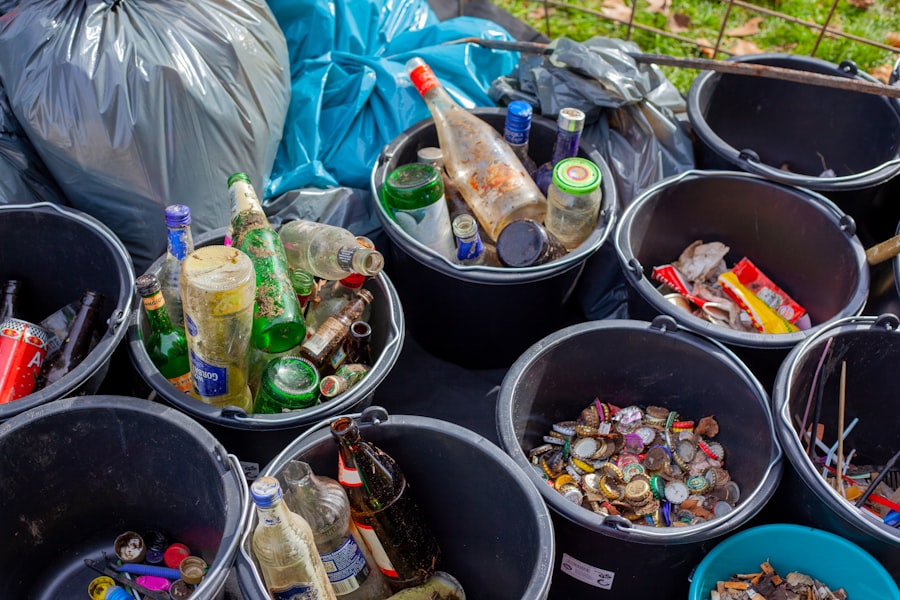
The vast amounts of data generated by smart waste management systems are not merely for monitoring; they are a goldmine for insights that can drive further improvements and predict future trends. This data-driven approach is like having a detailed map and weather forecast for the entire waste management journey.
Centralized Data Platforms and Dashboards
The collected data needs a home and a way to be understood. Centralized platforms act as the brain of the operation.
Aggregation and Visualization of Real-time Data
These platforms consolidate information from various sources:
- Unified Interface: Provides a single point of access for all waste management data, from bin fill levels and truck locations to sorting facility throughput.
- Interactive Dashboards: Visualizations such as charts, graphs, and heatmaps make complex data easily understandable, allowing managers to quickly grasp trends and identify anomalies.
- Customizable Reporting: Users can generate tailored reports based on specific metrics, such as collection efficiency, recycling rates, or landfill diversion.
Key Performance Indicators (KPIs) and Performance Monitoring
Data analytics allows for the precise tracking of success.
- Quantifiable Metrics: KPIs like “percentage of waste diverted from landfill,” “average collection cost per ton,” and “recycling contamination rate” provide clear benchmarks for performance.
- Benchmarking: Data can be compared against historical performance or industry standards to identify areas of excellence and areas requiring improvement.
- Trend Analysis: Over time, data reveals patterns in waste generation, recycling efficacy, and operational costs, enabling strategic planning.
Predictive Modeling for Resource Allocation and Waste Reduction
Looking into the future is where data analytics truly shines, enabling proactive rather than reactive decision-making.
Forecasting Waste Generation Patterns
By analyzing historical data, AI models can predict future waste volumes and composition.
- Seasonal and Event-Based Fluctuations: Predicting increases in waste during holidays, festivals, or specific weather events allows for preemptive adjustments in collection schedules and resource allocation.
- Demographic and Economic Influences: Understanding how population changes, economic activity, and consumer behavior impact waste generation helps in long-term planning.
- Optimized Resource Deployment: Knowing future needs allows for the efficient allocation of collection vehicles, personnel, and processing capacity.
Identifying Opportunities for Waste Reduction Interventions
Data can also highlight problematic areas and inform targeted interventions.
- Hotspot Identification: Pinpointing areas with consistently high waste generation or low recycling rates can trigger targeted public awareness campaigns or infrastructure improvements.
- Behavioral Analysis: Through anonymized data, patterns of consumption and disposal can be better understood, informing policies aimed at reducing waste at the source.
- Circular Economy Integration: Data on material flows can inform the development of new business models focused on reuse, repair, and remanufacturing, strengthening the circular economy.
In the quest for innovative approaches to environmental challenges, the article on Sustainable Tech Solutions highlights how smart technologies are transforming waste management practices. By integrating IoT devices and data analytics, cities can optimize their waste collection processes, reduce costs, and minimize their ecological footprint. For those interested in exploring more about the potential of technology in sustainability, you can check out this insightful piece on membership plans that support such initiatives.
Emerging Technologies and Future Prospects
| Metric | Description | Impact | Example Technology |
|---|---|---|---|
| Waste Collection Efficiency | Percentage improvement in waste collection routes using smart sensors and AI | Reduces fuel consumption and operational costs by up to 30% | IoT-enabled smart bins with fill-level sensors |
| Recycling Rate Increase | Improvement in recycling rates due to automated sorting and AI classification | Boosts recycling rates by 20-40% | AI-powered robotic sorting systems |
| Landfill Waste Reduction | Reduction in waste sent to landfills through better waste segregation and processing | Decreases landfill waste volume by 25% | Smart composting and bio-digestion technologies |
| Energy Recovery Efficiency | Efficiency of converting waste to energy using smart tech | Increases energy recovery efficiency by 15% | Waste-to-energy plants with AI process optimization |
| Carbon Emission Reduction | Reduction in greenhouse gas emissions from waste management operations | Reduces emissions by up to 40% | Electric waste collection vehicles and optimized routing |
| Operational Cost Savings | Cost savings achieved through automation and smart monitoring | Reduces operational costs by 20-35% | Integrated waste management platforms with real-time analytics |
The field of sustainable tech solutions for waste management is constantly evolving, with new innovations on the horizon that promise to further revolutionize the sector. These advancements are like setting sail for uncharted territories, driven by curiosity and a pursuit of greater efficiency.
Blockchain for Waste Traceability and Transparency
Blockchain technology, known for its distributed and immutable ledger capabilities, offers a novel approach to tracking waste streams.
Ensuring Chain of Custody for Recyclables
Blockchain can create an unalterable record of materials from point of generation to final processing.
- Verified Recycling Claims: Businesses can more credibly demonstrate their commitment to recycling and sustainability by providing verifiable data on the origin and destination of their waste materials.
- Preventing Illegal Dumping and Fraud: The transparent nature of blockchain makes it difficult to falsify waste disposal records or engage in illegal dumping, as every transaction is publicly auditable.
- Traceability of Hazardous Waste: For sensitive materials, blockchain can provide an exceptionally secure and transparent system for tracking handling and disposal.
Tokenization and Incentivization for Recycling Behaviors
The principles of blockchain can also be applied to create new incentives for public participation.
- Reward Systems: Individuals or businesses that appropriately sort and deposit recyclable materials can be rewarded with digital tokens, redeemable for goods or services.
- Gamification of Recycling: This can transform recycling from a civic duty into an engaging activity, fostering greater participation and improving recycling rates.
- Facilitating a Circular Economy: Tokenization can create visible value for recycled materials, encouraging investment and innovation in secondary material markets.
Advanced Bioreactor and Upcycling Technologies
Beyond traditional recycling, new methods are emerging to extract maximum value from organic waste and complex materials.
Anaerobic Digestion Enhancements
Anaerobic digestion, a process that breaks down organic matter in the absence of oxygen to produce biogas and digestate, is becoming more sophisticated.
- Optimized Biogas Production: Integrated sensor networks and advanced process control can maximize the efficiency and yield of biogas production, a renewable energy source.
- Nutrient-Rich Digestate Utilization: The digestate, a byproduct of digestion, can be repurposed as a valuable fertilizer, completing a nutrient cycle.
- Integration with Other Waste Streams: Novel bioreactor designs are exploring the co-digestion of multiple organic waste streams for enhanced efficiency.
Chemical Recycling and Material Upcycling
Chemical recycling breaks down plastics into their molecular building blocks, allowing for the creation of new plastics of virgin quality. Upcycling, on the other hand, transforms waste materials into products of higher value.
- Depolymerization and Repolymerization: Advanced chemical processes can break down polymers like PET into their constituent monomers, which are then repolymerized into new plastic resins.
- Creating Novel Materials: Upcycling initiatives are transforming waste into innovative construction materials, designer products, and even advanced composites, moving beyond simple material reuse.
- Addressing Difficult-to-Recycle Materials: These technologies hold promise for tackling plastics that are not easily processed through mechanical recycling methods.
The Circular Economy and Policy Integration
The ultimate goal of these technological advancements is the realization of a truly circular economy, where waste is minimized, and resources are kept in use for as long as possible. This requires a symbiotic relationship between technology and supportive policy frameworks.
Policy Drivers for Sustainable Waste Management
Government policies play a crucial role in fostering the adoption of smart technologies.
- Extended Producer Responsibility (EPR) Schemes: Shifting the responsibility for end-of-life management of products to the producers incentivizes them to design products for easier recycling and disposal.
- Landfill Taxes and Diverted Material Incentives: Financial mechanisms can make landfilling less attractive and provide economic benefits for recycling and resource recovery.
- Mandates for Smart Technology Adoption: Governments can set targets or mandates for the implementation of smart waste management solutions in municipal services.
The Future: Autonomous Systems and Zero-Waste Visions
The long-term vision for waste management is one of increasing autonomy and a near-elimination of waste.
- Fully Autonomous Collection Systems: Imagine drones or robotic vehicles that autonomously collect waste from designated points, further optimizing logistics.
- AI-Driven Resource Recovery Hubs: Centralized facilities that utilize AI and robotics to sort and process an ever-wider range of materials for maximum recovery.
- Consumer-Level Waste Reduction Tools: Smart home devices or apps that provide personalized guidance on waste reduction and proper disposal.
- Transitioning to a Truly Circular Society: The ultimate aim is to move away from a disposable culture towards one where materials are continuously cycled, minimizing our reliance on finite resources and significantly reducing environmental impact.
In conclusion, sustainable tech solutions are not just enhancing waste management; they are fundamentally redefining it. By embracing smart technologies, data analytics, and forward-thinking approaches, societies can move towards a future where waste is viewed not as a burden, but as a valuable resource, paving the way for a more sustainable and circular planet.