

This article provides an overview of the intersection between artificial intelligence (AI) innovation and quantum computing, specifically exploring its implications for the future of machine learning. It covers foundational concepts, potential applications, current challenges, and the developmental roadmap for this emergent field.
Understanding quantum computing is critical for grasping its potential impact on AI. Unlike classical computers, which store information as bits representing 0 or 1, quantum computers utilize qubits.
Qubits and Superposition
A qubit can exist in a superposition of both 0 and 1 simultaneously. This inherent probabilistic nature allows for a significant increase in information processing capacity. Imagine a light switch that can be both on and off at the same time, or even a continuous spectrum between the two states. This fundamental difference is what allows quantum computers to explore multiple possibilities concurrently.
Entanglement and Quantum Speedup
Another key quantum phenomenon is entanglement. When qubits are entangled, their fates become intrinsically linked, regardless of the distance separating them. Measuring one entangled qubit instantly influences the state of the others. This interconnectedness is crucial for facilitating the “quantum speedup” observed in certain algorithms. Consider entangled qubits as interconnected gears, where turning one immediately affects the others in a predetermined way. This correlation is not present in classical computing.
Quantum Gates and Circuits
Quantum computers manipulate qubits using quantum gates, analogous to logic gates in classical computing. These gates perform operations on qubits, altering their superposition and entanglement states. A sequence of these gates forms a quantum circuit, which executes a specific algorithm. Think of quantum gates as specialized tools that sculpt the quantum state of the qubits, guiding them towards a desired computational outcome.
Error Correction in Quantum Systems
Quantum states are delicate and susceptible to decoherence, where interactions with the environment cause them to lose their quantum properties. This necessitates sophisticated error correction mechanisms to maintain computational integrity. Error correction in quantum computing is a complex field, akin to attempting to maintain a perfectly balanced, intricate sculpture in a subtly vibrating environment.
In exploring the transformative potential of artificial intelligence, a related article titled “AI Innovation Insights: Quantum Computing and the Next Frontier of Machine Learning” delves into how quantum computing can revolutionize machine learning algorithms and enhance data processing capabilities. For further insights on this topic and more, you can visit this link.
Quantum Algorithms for Machine Learning
The true power of quantum computing for AI lies in its ability to execute algorithms that are intractable for classical machines. These algorithms promise breakthroughs in both supervised and unsupervised learning paradigms.
Quantum Variational Eigensolver (VQE) for Optimization
VQE is a hybrid quantum-classical algorithm particularly well-suited for optimization problems, a cornerstone of many machine learning tasks. It iteratively refines quantum parameters based on classical optimization to find the minimum eigenvector of a Hamiltonian. In machine learning, this could translate to finding optimal weights in a neural network or discovering the best clustering parameters. Think of VQE as a sculptor who uses a classical chisel to refine the rough shape of a block, but then employs quantum-powered finer tools to achieve the nuanced details that are impossible otherwise.
Quantum Support Vector Machines (QSVMs) for Classification
QSVMs aim to enhance classical Support Vector Machines (SVMs) by mapping data into a higher-dimensional quantum feature space, potentially uncovering non-linear separations that are difficult for classical SVMs. This could lead to more robust and accurate classification models, particularly for complex datasets. Imagine trying to separate two types of marbles scattered on a flat surface; a QSVM might be able to lift them into a third dimension where they naturally separate into distinct clusters, making classification much simpler.
Quantum Generative Adversarial Networks (QGANs) for Data Generation
QGANs leverage quantum circuits to enhance the generative capabilities of GANs. By utilizing quantum states to represent data and quantum operations for the generator and discriminator, QGANs may generate more realistic and diverse data, overcome mode collapse issues, and explore higher-dimensional data distributions. This could have significant implications for synthetic data generation in areas like drug discovery or image synthesis. Consider a QGAN as an artist with an expanded palette of colors and a deeper understanding of light and shadow, allowing them to create images with greater realism and subtlety than a classical artist.
Quantum Principal Component Analysis (QPCA) for Dimensionality Reduction
QPCA aims to accelerate and improve dimensionality reduction techniques. By using quantum routines to find the principal components of a dataset, QPCA could analyze high-dimensional data more efficiently, reducing noise and highlighting essential features. This is particularly valuable in bioinformatics or financial modeling where datasets often have hundreds or thousands of features. Envision QPCA as an intelligent filter that can quickly and accurately sift through a vast pile of sand and identify only the most valuable precious stones, discarding the irrelevant grains.
Hardware and Software Landscape
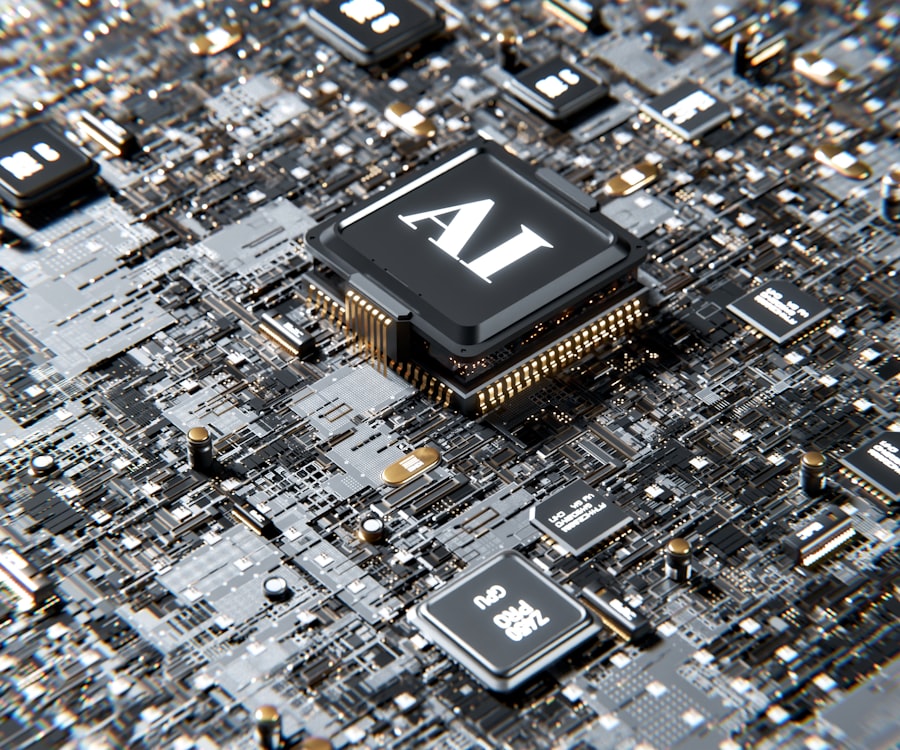
The development of quantum AI is intrinsically linked to advancements in both quantum hardware and software. The interplay between these two aspects dictates the pace and direction of innovation.
Superconducting Qubits and Trapped Ions
Currently, two prominent hardware architectures dominate the quantum computing landscape: superconducting qubits (e.g., IBM Quantum, Google AI) and trapped ions (e.g., IonQ). Each architecture presents unique advantages and challenges regarding qubit coherence, connectivity, and scalability. Superconducting qubits require extremely low temperatures, while trapped ions rely on precise laser manipulation. These are like different foundational engineering approaches to building complex structures, each with its own material science and construction techniques.
Quantum Cloud Platforms and Development Kits
Access to quantum hardware is increasingly available through cloud platforms provided by major tech companies and startups. These platforms often come with SDKs (Software Development Kits) like Qiskit (IBM) and Cirq (Google), allowing researchers and developers to design, simulate, and execute quantum algorithms. These platforms are crucial for democratizing access to quantum resources, enabling a wider range of individuals to experiment with quantum computing without needing to build their own hardware. Think of these cloud platforms as shared laboratories with specialized equipment, available to anyone with the right expertise and a network connection.
Quantum Programming Languages and Compilers
The development of specialized quantum programming languages (e.g., Q# for Microsoft Azure Quantum) and compilers is essential for translating high-level quantum algorithms into instructions that quantum hardware can execute. These languages aim to simplify the process of writing quantum code and optimize its execution on specific quantum architectures. These languages and compilers act as translators and efficiency experts, ensuring that the theoretical blueprints for quantum algorithms are accurately and efficiently implemented on the physical hardware.
Challenges and Limitations

Despite the promising outlook, the field of quantum AI faces significant hurdles that need to be addressed before widespread adoption.
Qubit Stability and Error Rates
Maintaining qubit coherence and minimizing error rates remains a primary challenge. Quantum systems are inherently fragile, and environmental noise can easily disrupt quantum states, leading to computational inaccuracies. This is like trying to perform a complex surgical procedure in a room prone to constant, unpredictable tremors; precision is incredibly difficult to achieve.
Scalability and Interconnects
Building large-scale quantum computers with numerous interconnected qubits is another major obstacle. As the number of qubits increases, managing their interactions and entanglement becomes exponentially more complex. This problem resembles the challenge of building an extremely large and intricate network of individual, highly sensitive components, where every connection must be perfectly maintained.
Algorithm Development and Hybrid Approaches
Developing quantum algorithms that offer a provable quantum advantage for real-world AI problems is an ongoing research area. Many current approaches involve hybrid quantum-classical algorithms, where classical computers handle certain parts of the computation while quantum computers execute specific quantum subroutines. These hybrid approaches are a pragmatic step, akin to using specialized advanced tools for certain tasks within a larger, conventionally executed construction project.
Data Accessibility and Quantum Transduction
Preparing classical data for quantum processing and extracting results back into classical formats – a process known as quantum transduction – presents its own set of challenges. Efficiently encoding classical information into quantum states and decoding quantum results with minimal loss is crucial. This is analogous to efficiently and accurately translating between two fundamentally different languages without losing any meaning or nuance in either direction.
In exploring the intersection of advanced technologies, the article on AI Innovation Insights delves into how quantum computing is poised to revolutionize machine learning, paving the way for unprecedented capabilities in data processing and analysis. For those interested in the ethical implications of these innovations, a related piece discusses the importance of eliminating bias and promoting inclusivity in AI development. You can read more about this crucial topic in the article on the future of ethical AI.
Future Outlook and Impact
| Metric | Current Status | Projected Growth | Impact on Machine Learning | Key Challenges |
|---|---|---|---|---|
| Quantum Computing Qubits | 100+ qubits (NISQ devices) | 1000+ qubits by 2027 | Enables complex model simulations and optimization | Qubit coherence and error rates |
| Quantum Machine Learning Algorithms | Prototype algorithms (e.g., QAOA, VQE) | Commercially viable algorithms by 2028 | Faster training and improved generalization | Algorithm scalability and hardware limitations |
| Investment in Quantum AI Research | Approx. 1 billion USD annually | Expected to double by 2026 | Accelerates innovation and practical applications | Funding allocation and interdisciplinary expertise |
| Machine Learning Model Complexity | Billions of parameters in deep learning models | Trillions of parameters with quantum enhancements | Improved accuracy and new capabilities | Computational resource demands |
| Quantum Advantage Timeline | Early demonstrations in specific tasks | Broad quantum advantage expected by 2030 | Revolutionizes data processing and AI tasks | Hardware maturity and error correction |
The journey of quantum AI is in its early stages, but its potential to reshape the landscape of machine learning is substantial.
Enhanced Drug Discovery and Materials Science
Quantum machine learning could revolutionize drug discovery by accelerating the simulation of molecular interactions and predicting material properties with unprecedented accuracy. This could lead to the development of new therapeutics and novel materials with tailor-made functionalities. Imagine a quantum AI as a microscopic architect capable of designing molecules with atomic-level precision, leading to vastly improved materials and medicines.
Financial Modeling and Optimization
In finance, quantum AI could provide more sophisticated tools for risk assessment, portfolio optimization, and fraud detection. Its ability to process complex dependencies and explore vast solution spaces could lead to more robust and profitable financial strategies. Consider quantum AI as a financial analyst who can instantly and accurately simulate every possible market scenario and identify optimal investment paths, tasks that are impossible for classical systems.
Cybersecurity and Cryptography
While offering new cryptographic tools based on quantum principles, quantum computing also poses a challenge to current encryption methods (e.g., Shor’s algorithm). Quantum AI could play a role in developing new quantum-resistant cryptographic algorithms, ensuring secure communication in a post-quantum era. This is a perpetual arms race, where quantum AI is both a weapon forging new defenses and an aggressor breaking existing ones, demanding constant innovation in cybersecurity.
Artificial General Intelligence (AGI) Potential
While speculative, some researchers hypothesize that quantum computing, with its ability to handle complex correlations and probabilistic reasoning, could contribute to the development of Artificial General Intelligence (AGI). The unique computational substrate offered by quantum systems might enable the exploration of cognitive architectures currently beyond classical computational reach. This is akin to providing a brain with fundamentally new ways of processing information, potentially opening pathways to advanced forms of intelligence. However, this remains a highly theoretical area.
As you consider the trajectory of AI, understand that quantum computing represents a paradigm shift. Its slow but inexorable progress promises to unlock capabilities that are currently beyond our grasp, fundamentally altering the fabric of what machine learning can achieve. The path is complex and filled with technical hurdles, but the potential rewards are significant.