


The field of robotics is undergoing a significant transformation, driven by advancements in artificial intelligence (AI). This evolution is leading to the development of autonomous systems capable of operating in increasingly complex and unstructured environments. These systems are moving beyond pre-programmed tasks to exhibit adaptive behaviors, learning, and decision-making capabilities. This article explores the core concepts, challenges, and applications of AI-powered autonomous robotics, providing a comprehensive overview for the interested reader.
Autonomous systems integrate various technologies to perceive, reason, act, and learn from their surroundings without continuous human intervention. This involves a synergistic interplay of hardware and software components.
Perception and Sensing
Accurate perception is fundamental for any autonomous system. It acts as the system’s eyes and ears, gathering data about the operational environment.
Sensor Modalities
Robots utilize an array of sensors to build a comprehensive understanding of their surroundings. These include:
- Lidar (Light Detection and Ranging): Generates precise 3D maps of the environment by emitting laser pulses and measuring the time it takes for them to return. This is crucial for distance measurement and obstacle detection.
- Cameras (Monocular, Stereo, RGB-D): Provide visual information, enabling object recognition, tracking, and depth perception. Stereo cameras mimic human binocular vision to estimate distances, while RGB-D cameras combine color information with depth data.
- Radar (Radio Detection and Ranging): Detects objects and their velocity using radio waves, particularly effective in adverse weather conditions like fog or heavy rain where optical sensors may be limited.
- Ultrasonic Sensors: Measure distances to nearby objects using sound waves, commonly used for short-range obstacle avoidance.
- Inertial Measurement Units (IMUs): Include accelerometers and gyroscopes to measure orientation, angular velocity, and linear acceleration, essential for maintaining pose and understanding movement.
- GPS (Global Positioning System): Provides global localization, though its accuracy can be limited in indoor or urban canyon environments.
Sensor Fusion
Combining data from multiple sensor modalities, a process known as sensor fusion, is crucial for robust perception. No single sensor provides a complete or infallible picture. Lidar excels at accurate distance, but struggles with object classification. Cameras provide rich visual data but are sensitive to lighting. By integrating these diverse data streams, the system can overcome individual sensor limitations, creating a more comprehensive and reliable environmental model. This is akin to a human using both sight and touch to understand an object.
Planning and Control
Once an autonomous system perceives its environment, it must decide on a course of action and execute it. This involves sophisticated planning and control algorithms.
Motion Planning
Motion planning algorithms generate safe and efficient paths for the robot to navigate through its environment. This can range from simple pathfinding in a static map to complex trajectory generation in dynamic, unpredictable settings.
- Global Planning: Determines a high-level path from a starting point to a destination, often based on a complete map of the environment.
- Local Planning: Addresses immediate obstacles and dynamic changes in the environment, adjusting the global path as needed. This is where real-time obstacle avoidance occurs.
- Path Optimization: Algorithms aim to find paths that minimize travel time, energy consumption, or maximize safety, considering kinematic and dynamic constraints of the robot.
Control Systems
Control systems translate the planned motions into physical actions by actuating the robot’s motors and other components.
- Feedback Control: Continuously monitors the robot’s actual state (position, velocity) and compares it to the desired state, making real-time adjustments to minimize errors. This is analogous to a driver making constant small adjustments to keep a car on track.
- Model Predictive Control (MPC): Predicts future system behavior over a short horizon and optimizes control inputs to achieve desired outcomes while respecting constraints. MPC is particularly effective in dynamic environments where decisions need to anticipate future conditions.
- Reinforcement Learning for Control: In some advanced systems, reinforcement learning is used to learn optimal control policies through trial and error, particularly in situations where a precise mathematical model of the robot or environment is difficult to define.
In exploring the advancements in robotics and artificial intelligence, a related article that delves into the implications of these technologies in various sectors is available at this link: Robotics Revolution: AI-Powered Autonomous Systems for Complex Environments. This article discusses how autonomous systems are transforming industries by enhancing efficiency and safety in complex environments, highlighting the potential benefits and challenges that come with integrating AI into robotics.
The Role of Artificial Intelligence
AI is the brain driving the intelligence of autonomous systems, enabling them to learn, adapt, and make decisions in complex scenarios.
Machine Learning for Perception and Reasoning
Machine learning algorithms have revolutionized how autonomous systems interpret sensor data and make sense of their environment.
Object Detection and Recognition
Deep learning, particularly convolutional neural networks (CNNs), significantly enhances the ability of robots to detect and classify objects in real-time from camera images or lidar point clouds. This is crucial for identifying obstacles, distinguishing pedestrians from vehicles, or recognizing specific tools.
Semantic Segmentation
Semantic segmentation goes a step further by classifying every pixel in an image or point in a point cloud according to the object it belongs to. This provides a detailed, pixel-level understanding of the environment, allowing the robot to differentiate road surfaces from sidewalks, or trees from buildings.
State Estimation and Localization
AI-powered techniques like Simultaneous Localization and Mapping (SLAM) allow robots to build a map of an unknown environment while simultaneously tracking their own position within that map. Visual-inertial odometry (VIO) combines camera and IMU data to provide robust localization even without GPS.
Decision-Making and Behavior Generation
AI empowers autonomous systems to move beyond simple reactive behaviors to exhibit more sophisticated decision-making and generate complex behaviors.
Reinforcement Learning (RL)
RL enables robots to learn optimal policies through trial and error, interacting with their environment and receiving rewards or penalties for their actions. This is particularly useful in situations where explicit programming of all possible scenarios is impractical. For example, an RL agent can learn to navigate a cluttered environment more efficiently over time.
Explainable AI (XAI)
As autonomous systems take on more critical roles, understanding their decision-making process becomes vital. Explainable AI aims to make AI models more transparent, allowing humans to comprehend why a robot made a particular decision. This is especially important in applications like autonomous vehicles or medical robotics, where accountability is paramount.
Challenges in Complex Environments
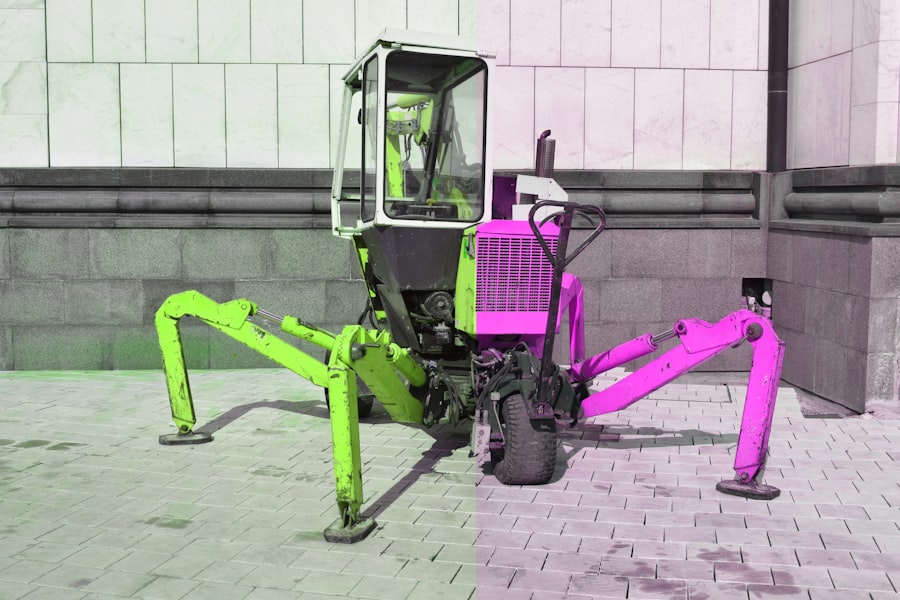
Operating in complex environments presents unique and persistent challenges for autonomous systems. These environments are often unstructured, dynamic, and unpredictable.
Unstructured and Dynamic Environments
Unlike factory settings with predefined pathways and consistent lighting, real-world environments are inherently messy.
Novelty and Generalization
Autonomous systems struggle with novel situations or objects they haven’t encountered during training. Generalizing learned behaviors to new contexts remains a significant research area. A robot trained on urban roads might struggle in dense forest terrain.
Dynamic Obstacles and Uncertainty
The presence of unpredictable moving objects, such as pedestrians, other vehicles, or wildlife, introduces significant uncertainty. The system must continuously predict their movements and adjust its plans accordingly, often under time pressure. This requires robust prediction models.
Robustness and Safety
Ensuring the safe and reliable operation of autonomous systems is paramount, especially in applications that involve human interaction.
Perception Under Adverse Conditions
Sensor performance can degrade significantly in adverse weather (rain, snow, fog), poor lighting, or highly cluttered environments. Developing robust perception systems that can reliably operate under these conditions is a major challenge.
System Malfunctions and Failures
The complexity of autonomous systems increases the potential for software bugs, hardware failures, or sensor malfunctions. Developing fault-tolerant designs and graceful degradation strategies is critical to prevent catastrophic failures. The system must also be able to detect when it is operating outside its safe envelope and alert human operators or initiate a safe stop.
Human-Robot Interaction and Trust
As robots become more integrated into human spaces, effective and trustworthy interaction is crucial.
Collaboration and Shared Understanding
For robots to effectively collaborate with humans, they need to understand human intentions and preferences, and conversely, humans need to understand the robot’s capabilities and limitations. Establishing shared situational awareness is key.
Ethical Considerations
The deployment of autonomous systems raises numerous ethical questions, such as responsibility in accidents, bias in AI algorithms, and the impact on employment. These broader societal concerns must be addressed alongside technological development. For example, how should an autonomous vehicle prioritize actions in an unavoidable collision scenario?
Applications Across Industries

AI-powered autonomous systems are finding applications across a wide spectrum of industries, transforming operations and offering new capabilities.
Autonomous Vehicles (AVs)
The development of self-driving cars, trucks, and drones represents a significant frontier for autonomous technology.
Logistics and Transportation
Autonomous trucks can operate 24/7, potentially reducing logistics costs and improving efficiency. Autonomous drones are used for delivery, inspection of infrastructure, and surveillance. Robotaxis offer the promise of on-demand, personalized transportation.
Public Safety and Defense
Autonomous vehicles can perform dangerous missions, such as reconnaissance in hazardous zones, bomb disposal, or patrolling borders, reducing risk to human personnel.
Industrial Automation and Manufacturing
Beyond traditional industrial robots, AI-powered systems are enabling greater flexibility and autonomy in manufacturing.
Collaborative Robots (Cobots)
Cobots are designed to work safely alongside human operators, assisting with tasks like assembly, inspection, and material handling, often learning tasks by demonstration.
Automated Warehousing and Logistics
Autonomous mobile robots (AMRs) navigate warehouses, transporting goods, sorting packages, and optimizing inventory management, significantly increasing throughput and accuracy.
Healthcare and Medical Robotics
The healthcare sector is seeing increasing adoption of autonomous systems for various medical tasks.
Surgical Robotics
AI-enhanced surgical robots provide greater precision and dexterity to surgeons, enabling minimally invasive procedures with improved patient outcomes. They can also assist with planning and intraoperative guidance.
Rehabilitation and Assistive Devices
Autonomous robotic exoskeletons and prosthetics are being developed to aid patients with mobility impairments, offering personalized assistance and promoting rehabilitation. Robots are also being used for elder care, providing companionship and monitoring.
Exploration and Environmental Monitoring
Autonomous systems are pushing the boundaries of exploration in remote and dangerous environments.
Space Exploration
Autonomous rovers and probes explore planetary surfaces and collect scientific data without human presence, operating in extreme conditions with communication delays.
Oceanography and Disaster Response
Autonomous underwater vehicles (AUVs) conduct deep-sea research, map the ocean floor, and monitor marine ecosystems. Drones are deployed for rapid damage assessment and search and rescue operations in disaster zones, reaching areas inaccessible to humans.
In exploring the advancements in robotics, the article on AI-Powered Autonomous Systems for Complex Environments highlights the transformative potential of these technologies. For a deeper understanding of the implications and applications of robotics in various fields, you might find the related article on innovative robotic solutions quite insightful. You can read more about it here. This resource provides valuable perspectives on how robotics is reshaping industries and enhancing efficiency in complex tasks.
Future Outlook
| Metric | Description | Value | Unit |
|---|---|---|---|
| Autonomy Level | Degree of independent operation in complex environments | 4 | Scale (1-5) |
| Navigation Accuracy | Precision in pathfinding and obstacle avoidance | 98.7 | % |
| Processing Latency | Time taken to process sensor data and make decisions | 15 | Milliseconds |
| Operational Uptime | Percentage of time system remains functional without failure | 99.2 | % |
| Task Completion Rate | Success rate of completing assigned tasks autonomously | 92.5 | % |
| Energy Efficiency | Energy consumption per hour of operation | 45 | Watts |
| Sensor Range | Maximum effective distance for environmental sensing | 120 | Meters |
| AI Model Size | Size of the deployed AI model for autonomous control | 250 | MB |
The trajectory of AI-powered autonomous systems points towards increasingly sophisticated and pervasive integration into daily life and various industries. Further advancements in computational power, sensor miniaturization, and novel AI algorithms, particularly in areas like continual learning and multi-modal reasoning, will expand their capabilities. The development of robust cognitive architectures that allow robots to reason about abstract concepts, plan over longer horizons, and engage in more intuitive human-robot interaction is a key area of focus. Addressing ethical considerations and ensuring public trust will be critical as these systems transition from specialized applications to mainstream deployment. The ongoing convergence of robotics, AI, and edge computing heralds an era where autonomous systems will not merely assist, but actively participate in shaping our future operations and interactions with the physical world. Understanding these developments is essential for anyone observing societal and technological progress.