

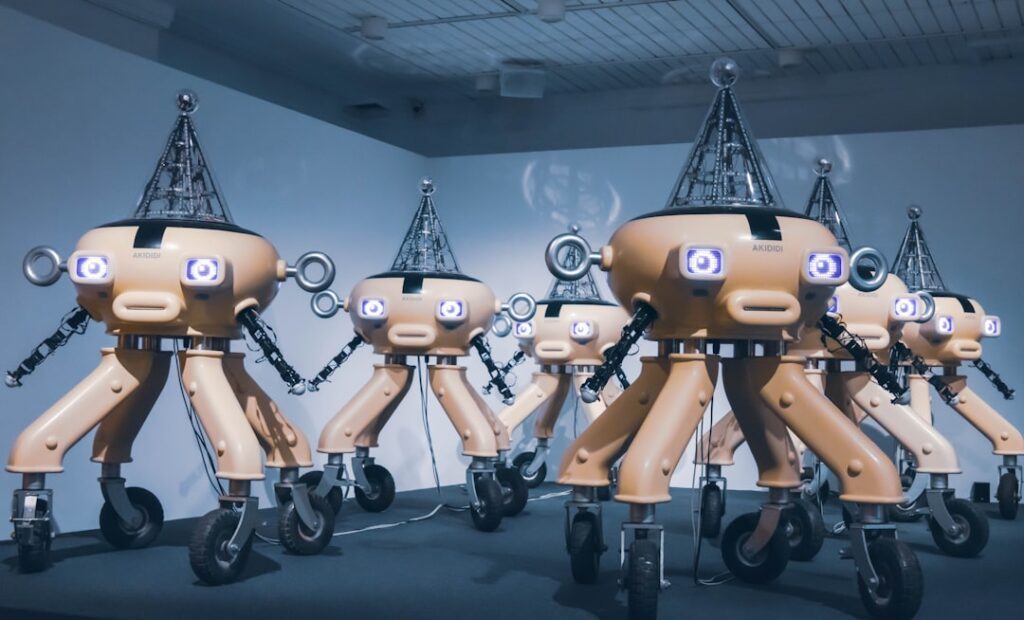
The integration of robots into logistics operations is reshaping the landscape of global commerce. This evolution, often termed the ‘Robotics Revolution,’ is not merely about replacing human labor but fostering a symbiotic relationship between humans and machines. This article explores the nascent phase of this revolution, focusing on human-robot collaboration within logistics hubs.
Logistics hubs, the circulatory systems of supply chains, are undergoing a significant transformation driven by advancements in robotics. Historically, these facilities relied heavily on manual labor for tasks such as receiving, put-away, order picking, and shipping. While efficient for their time, these processes were often labor-intensive, prone to human error, and limited by human physical capabilities. The advent of robotics has presented a paradigm shift, offering solutions to these inherent challenges.
Evolution of Warehouse Automation
Early forms of automation in warehouses were rudimentary, often involving conveyor belts and automated guided vehicles (AGVs). These systems focused on material movement but lacked the intelligence and flexibility to adapt to dynamic environments or perform complex tasks. The introduction of sophisticated sensors, advanced algorithms, and more dexterous robotic arms has paved the way for a new generation of automation.
From AGVs to AMRs
Automated Guided Vehicles (AGVs) operate along predefined paths, typically marked by magnetic strips or laser guides. Their movement is rigid, and they require significant infrastructure changes to reroute. Autonomous Mobile Robots (AMRs), on the other hand, navigate intelligently using onboard sensors and sophisticated mapping software, allowing them to dynamically adjust their routes and avoid obstacles. This increased flexibility makes AMRs far more adaptable to the constantly changing demands of a logistics hub. They are the nimble navigators in the warehouse, capable of weaving through aisles where AGVs would be confined.
The Rise of Robotic Arms
Beyond mobile platforms, robotic arms are becoming increasingly prevalent. These articulated appendages, equipped with specialized grippers or vacuum suction devices, are designed for precise manipulation of goods. They can lift, sort, and place items with remarkable accuracy and speed, tasks that were once the sole domain of human workers.
In exploring the advancements in robotics and automation, a related article titled “The Future of Supply Chain: Integrating AI and Robotics” delves into the transformative impact of artificial intelligence on logistics operations. This piece complements the discussion in “Robotics Revolution: Human-Robot Collaboration in Logistics Hubs” by highlighting how AI-driven technologies enhance efficiency and collaboration between human workers and robotic systems. For further insights, you can read the article [here](https://brainng.one/my-ticket/).
The Pillars of Human-Robot Collaboration
The core of this revolution lies not in segregation but in integration. Human-robot collaboration leverages the distinct strengths of both humans and machines to achieve superior outcomes. Robots excel at repetitive, physically demanding, or precision-oriented tasks, while humans provide adaptability, problem-solving skills, and the ability to handle exceptions and nuanced situations.
Task Allocation: A Symphony of Skills
The successful integration of robots hinges on intelligent task allocation. This involves identifying which tasks are best suited for automation and which require human intervention.
Repetitive and High-Volume Tasks
Tasks that are monotonous, require extreme precision, or involve lifting heavy objects are prime candidates for robotic automation. Examples include:
- Sorting and Packing: Robots can sort incoming goods by SKU or destination and pack items into outbound containers with speed and consistency.
- Palletizing and Depalletizing: Heavy lifting and repetitive stacking of goods onto pallets, a physically taxing job for humans, can be efficiently handled by robotic arms.
- Inventory Management: Robots equipped with scanners can perform rapid cycle counts and verify inventory levels, reducing the risk of human error.
The robot becomes the tireless engine, powering through the grunt work without fatigue or complaint.
Variable and Exception-Based Tasks
Human workers are invaluable for tasks that require:
- Quality Control and Inspection: While robots can perform basic checks, humans are crucial for nuanced quality assessments, identifying subtle defects, or understanding complex product damage.
- Problem Solving and Troubleshooting: When a robot encounters an unexpected situation, such as a misplaced item or a damaged package, a human operator is needed to assess the issue and implement a solution.
- Specialized Handling: Items that are unusually shaped, fragile, or require delicate handling may still necessitate human dexterity.
The human acts as the conductor, stepping in to guide the orchestra when a particular instrument goes slightly off-key.
The Human as Supervisor and Strategist
In many collaborative models, the human role evolves from direct task execution to supervision and strategic oversight.
Monitoring and Intervention
Human operators monitor robot performance, ensuring that tasks are being completed accurately and efficiently. They are equipped to intervene when necessary, override robotic decisions, or manually perform tasks that automation cannot handle. This supervisory role requires a different skillset, emphasizing observation and critical thinking.
System Optimization and Training
Human personnel are also responsible for training robots, especially those utilizing machine learning. This involves providing feedback on performance, identifying areas for improvement, and ensuring that robot behaviour aligns with operational goals. They become the teachers in this evolving educational system of the warehouse.
Technologies Powering the Collaboration

The effectiveness of human-robot collaboration is underpinned by a suite of advanced technologies that enable seamless interaction and efficient operation.
Advanced Sensing and Perception
Robots need to “see” and “understand” their environment to operate safely and effectively alongside humans.
Computer Vision and LiDAR
Computer vision systems, powered by cameras and sophisticated algorithms, allow robots to identify objects, read bar codes, and interpret their surroundings. LiDAR (Light Detection and Ranging) provides robots with precise depth perception, enabling them to map their environment and navigate without collisions. These technologies are the robot’s eyes and ears, building a digital map of the physical world.
Force and Tactile Sensing
For robotic arms, force and tactile sensors are crucial for delicate manipulation. These sensors provide feedback on the amount of pressure being applied, preventing damage to goods and ensuring a secure grip. This allows a robot to handle a delicate piece of glass with the same care as a human hand, a capability once thought impossible.
Artificial Intelligence and Machine Learning
AI and ML are the brains behind robotic collaboration, enabling them to learn, adapt, and make intelligent decisions.
Predictive Analytics
ML algorithms can analyze vast amounts of operational data to predict demand, identify potential bottlenecks, and optimize workflows. This proactive approach ensures that the logistics hub operates with maximum efficiency.
Reinforcement Learning
Through reinforcement learning, robots can learn to perform new tasks or improve existing ones by trial and error, receiving rewards for successful outcomes. This allows for continuous improvement and adaptation to evolving operational needs. The robot learns not just from explicit programming but from experience, much like a human apprentice.
Robust Communication and Connectivity
Seamless communication between robots, human operators, and warehouse management systems (WMS) is paramount.
Wireless Technologies and IoT
Advanced wireless technologies, including 5G and the Internet of Things (IoT), enable real-time data exchange, allowing robots and humans to stay synchronized and aware of each other’s actions. This interconnectedness forms the nervous system of the collaborative environment.
Intuitive Human-Machine Interfaces (HMIs)
HMIs play a crucial role in facilitating effective collaboration. These interfaces provide clear and concise information to human operators about robot status, performance, and any required actions. They are the universal translators, ensuring that humans and robots understand each other.
Benefits and Challenges of Collaboration
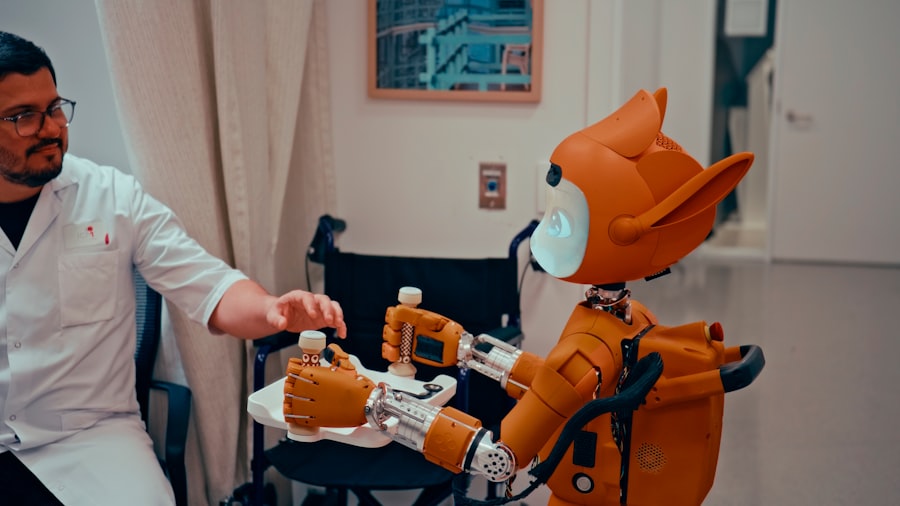
The integration of human-robot collaboration in logistics hubs offers a compelling array of benefits, but it also presents certain challenges that need careful consideration.
Enhanced Efficiency and Productivity
The most immediate benefit is the significant boost in efficiency and productivity. Robots can operate continuously, 24/7, without fatigue, exponentially increasing throughput.
Reduced Cycle Times
By automating repetitive tasks and optimizing workflows, robots can drastically reduce the time it takes to process orders, from receiving to shipping.
Increased Throughput
The combined efforts of humans and robots can handle a much higher volume of goods, allowing logistics hubs to scale operations more effectively to meet fluctuating demand.
Improved Safety and Ergonomics
Logistics environments can be physically demanding and hazardous. Human-robot collaboration can mitigate these risks.
Reduced Risk of Injury
By taking over strenuous lifting, repetitive motions, and tasks in hazardous areas, robots reduce the incidence of musculoskeletal injuries and workplace accidents among human employees.
Better Working Conditions
The shift in task allocation allows human workers to focus on more engaging and less physically taxing roles, leading to improved job satisfaction and overall well-being.
Cost Optimization
While the initial investment in robotics can be substantial, the long-term cost savings are significant.
Lower Labor Costs
Robots can perform tasks that would otherwise require a larger human workforce, leading to reduced labor expenditure, especially in regions with high labor costs.
Reduced Error Rates
Robots are less prone to human error, which can lead to costly mistakes such as mispicks, damaged goods, or incorrect shipments. Accuracy translates directly to financial savings.
Challenges to Consider
Despite the advantages, integrating human-robot collaboration is not without its hurdles.
Implementation Costs and ROI
The initial capital outlay for robotic systems can be significant. Demonstrating a clear return on investment (ROI) and securing funding are critical considerations for businesses. The upfront price tag can feel like a steep mountain to climb.
Workforce Training and Reskilling
The shift in job roles necessitates comprehensive training programs to equip human workers with the new skills required to operate, maintain, and collaborate with robots. This requires a commitment to continuous learning and adaptation.
Integration Complexity
Integrating new robotic systems with existing warehouse infrastructure and IT systems can be complex. Ensuring seamless interoperability and preventing disruptions to ongoing operations is crucial.
Ethical and Social Implications
The perception of robots replacing human jobs can lead to employee anxiety. Open communication, transparency, and a focus on retraining and upskilling are essential for managing these social aspects.
In the context of the ongoing advancements in automation, a related article that explores the integration of technology in logistics is available at this link. The piece delves into how innovative solutions are reshaping supply chain dynamics, emphasizing the importance of human-robot collaboration. For more insights on this topic, you can read the article here: explore our services. This resource provides a comprehensive overview of the latest trends and technologies that are driving efficiency in logistics hubs.
The Future of Logistics Hubs: A Collaborative Ecosystem
| Metric | Description | Value | Unit | Impact on Logistics Hubs |
|---|---|---|---|---|
| Robot Deployment Rate | Number of robots introduced per month | 50 | units/month | Accelerates automation and operational efficiency |
| Human-Robot Interaction Time | Average time humans spend collaborating with robots per shift | 3 | hours/shift | Enhances teamwork and task sharing |
| Order Processing Speed | Average number of orders processed per hour | 1200 | orders/hour | Improved throughput due to automation |
| Error Rate Reduction | Decrease in errors due to robot assistance | 35 | percent | Improves accuracy and reduces rework |
| Workplace Safety Incidents | Number of safety incidents reported monthly | 2 | incidents/month | Reduced due to robot handling of hazardous tasks |
| Energy Consumption | Average energy used by robots per day | 150 | kWh/day | Impacts operational costs and sustainability |
| Employee Satisfaction | Percentage of employees reporting positive collaboration experience | 78 | percent | Indicates acceptance and morale improvement |
The trend towards human-robot collaboration in logistics hubs is not a fleeting phenomenon but a fundamental shift that will define the future of supply chain operations. As technology continues to evolve, the capabilities of robots will expand, and their integration with human workers will become even more sophisticated.
Advancements in Dexterity and Intelligence
Future robots will likely possess even greater dexterity, allowing them to handle a wider range of items with increased precision. Their artificial intelligence will advance, enabling them to understand context, anticipate needs, and operate with a higher degree of autonomy.
Human-Robot Interface Evolution
The interfaces for interacting with robots will become more intuitive and seamless, potentially moving towards augmented reality (AR) overlays that provide real-time guidance and information directly within the worker’s field of vision. Imagine AR glasses guiding a human worker to the exact location of a misplaced item, or showing a robot how to pick an unfamiliar object.
The Adaptive and Resilient Supply Chain
Human-robot collaboration is laying the groundwork for more adaptive and resilient supply chains. By leveraging the strengths of both humans and machines, logistics hubs can respond more effectively to disruptions, market fluctuations, and evolving customer demands. This creates a logistics network that is not just efficient but also agile and robust, able to weather the storms of uncertainty. The future logistics hub is not a factory of automatons, but a dynamic ecosystem where human ingenuity and robotic capability work hand-in-hand, navigating the complexities of global commerce with unprecedented efficiency and intelligence.