


The application of robotics in search and rescue (SAR) operations has progressed significantly, particularly with the advent of swarm intelligence. This approach leverages multiple autonomous robots, operating cooperatively, to overcome the limitations of individual robotic units or human teams in complex disaster scenarios. This article explores the concept of robotics revolutionizing SAR through swarm intelligence, detailing its mechanisms, applications, challenges, and future prospects.
Traditional SAR operations often involve human teams, sometimes augmented by single robotic platforms. While effective in many situations, these methods face inherent limitations. Human responders are vulnerable to hazardous environments, fatigue, and require extensive training. Single robotic platforms, while robust, offer a narrow field of view and can be overwhelmed by large search areas or complex obstacles. The integration of swarm intelligence offers a fundamental shift in this paradigm.
Limitations of Traditional SAR
- Human Vulnerability: Exposure to collapsed structures, hazardous materials, and extreme weather conditions poses significant risks to human life.
- Logistical Challenges: Deploying and coordinating large human teams in disaster zones is complex, time-consuming, and resource-intensive.
- Single Robot Bottlenecks: A lone robot’s failure can halt an entire search. Its limited sensory input restricts situational awareness across an expansive area. The “single point of failure” vulnerability is amplified in time-critical situations.
Emergence of Swarm Robotics
Swarm robotics, inspired by biological systems like ant colonies or bird flocks, emphasizes decentralized control and emergent behavior. Instead of a single, highly complex robot, a swarm consists of numerous simpler, less expensive robots working in concert. This distributed intelligence allows for greater robustness, adaptability, and scalability in dynamic environments. Imagine a fleet of small, nimble vessels navigating a treacherous sea, each contributing to a larger objective rather than relying on one monolithic ship.
In exploring the advancements in robotics, particularly in the context of swarm intelligence for search and rescue operations, it is also essential to consider the ethical implications of artificial intelligence. A related article that delves into this topic is “The Future of Ethical AI: Eliminating Bias and Promoting Inclusivity,” which discusses how ethical frameworks can guide the development of AI technologies, ensuring they are beneficial and fair. For more insights, you can read the article here: The Future of Ethical AI.
Principles of Swarm Intelligence in SAR
The effectiveness of swarm robotics in SAR stems from a set of core principles that govern the individual robot’s actions and the collective’s emergent behavior. These principles allow a group of relatively unsophisticated agents to achieve complex tasks that would be impossible for any single agent.
Decentralized Control
Unlike traditional hierarchical systems where a central authority dictates every action, swarm robots operate with decentralized control. Each robot makes decisions based on local information gleaned from its sensors and communication with nearby swarm members. This eliminates the vulnerability of a single point of failure and allows the swarm to adapt quickly to unforeseen changes in the environment. Think of a distributed network rather than a central server; if one node fails, the network can still function.
Local Interactions and Emergent Behavior
Individual robots in a swarm interact primarily with their immediate neighbors. These local interactions, governed by simple rules, give rise to complex global behaviors. For example, robots might be programmed to move towards areas with higher concentrations of a detected signal (e.g., body heat), avoid obstacles, and maintain a certain distance from each other. The collective result is an efficient search pattern that covers the entire area. The individual “ant” has simple rules, but the “colony” exhibits complex foraging behavior.
Redundancy and Robustness
The large number of robots in a swarm inherently provides redundancy. The failure of a few individual robots does not necessarily compromise the overall mission. The remaining robots can reconfigure and continue the task, maintaining operational continuity. This robustness is crucial in unpredictable disaster zones where equipment damage is a significant possibility. If one lamp in a chandelier goes out, the room is not plunged into darkness.
Scalability and Adaptability
Swarm systems are inherently scalable. Adding more robots simply increases the search capacity and redundancy. Furthermore, their decentralized nature allows them to adapt to diverse environments and changing mission parameters with relative ease. A swarm designed for indoor building inspection can, with minor adjustments, be deployed for outdoor wilderness search.
Applications in Search and Rescue
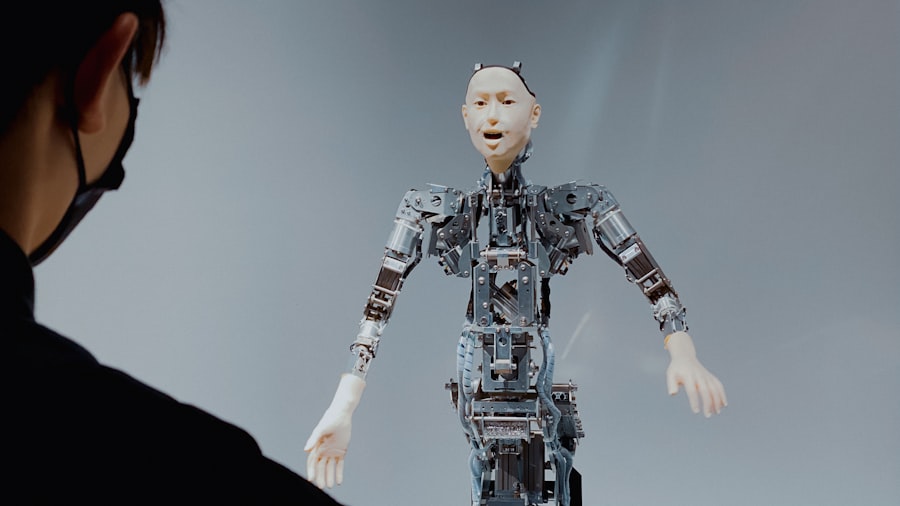
The capabilities of swarm intelligence translate into a multitude of practical applications within the SAR domain. These applications leverage the swarm’s ability to cover large areas, penetrate complex environments, and provide real-time situational awareness.
Wide-Area Exploration and Mapping
In the aftermath of an earthquake or a hurricane, vast areas can be affected, rendering traditional surveys difficult. A swarm of aerial robots (drones) can quickly map damaged infrastructure, identify collapse zones, and locate potential survivor locations from above. Simultaneously, ground-based robots can explore rubble piles and unstable structures, creating detailed 3D maps that human rescuers can use for planning.
- Aerial Reconnaissance: Drones equipped with optical, thermal, and lidar sensors can rapidly survey large disaster zones. They can identify structural damage, unstable terrain, and potential entry points for ground teams.
- 3D Reconstruction: By constantly exchanging data, swarm robots can collaboratively build highly accurate 3D models of complex environments, including collapsed buildings, aiding in structural analysis and rescue planning.
Victim Detection and Localization
Locating survivors trapped under debris or lost in vast wilderness areas is a primary objective of SAR. Swarm robots can be equipped with various sensors to detect signs of life.
- Thermal Imaging: Robots can scan for heat signatures in collapsed buildings, indicating the presence of trapped individuals.
- Acoustic Sensors: Microphones can detect faint sounds like calls for help or tapping.
- Chemical Sniffers: Specialized sensors can detect human-specific volatile organic compounds, offering a way to “smell” survivors.
- Radio Signal Triangulation: Robots can triangulate the location of mobile phones or dedicated survivor beacons.
Hazardous Environment Navigation
Disaster zones often present environments too dangerous for human entry due to structural instability, hazardous material spills, or oxygen deprivation. Swarm robots can act as advanced scouts, gathering vital information without risking human lives.
- Rubble Penetration: Small, robust robots can navigate through confined spaces and under debris, reaching areas inaccessible to humans.
- Gas Detection: Sensors can identify and map hazardous gas concentrations, providing critical data for human entry protocols.
- Structural Integrity Assessment: Robots can identify stress points and potential collapse risks within damaged structures.
Communication Relay and Network Establishment
In disaster zones, traditional communication infrastructure is frequently compromised. Swarm robots, particularly aerial platforms, can establish temporary communication networks, extending the reach of rescuers and facilitating information exchange.
- Ad-Hoc Networks: Drones equipped with radio transceivers can form a mesh network, relaying communication signals between ground teams, command centers, and even stranded survivors with mobile devices.
- Situational Awareness Data Transmission: Real-time video feeds, sensor data, and mapping information collected by the swarm can be transmitted back to a central command, providing unparalleled situational awareness.
Challenges and Considerations
Despite the promise of swarm intelligence in SAR, several significant challenges must be addressed for its widespread and effective implementation. These challenges span technical, ethical, and logistical domains.
Technical Hurdles
The seamless operation of a robotic swarm in unpredictable disaster environments requires robust technological solutions.
- Robust Communication: Maintaining stable communication among numerous robots, especially in environments with signal interference, is critical. The “fog of war” in disaster zones extends to electronic signals.
- Energy Management: Robots, particularly smaller ones, have limited power supplies. Efficient energy management and autonomous recharging capabilities are crucial for extended operations.
- Navigation and Localization: Accurate navigation and localization in GPS-denied environments (e.g., collapsed buildings, underground) pose a significant challenge. SLAM (Simultaneous Localization and Mapping) algorithms need to be highly robust.
- Sensor Fusion: Integrating data from diverse sensors across multiple robots to create a coherent understanding of the environment requires sophisticated algorithms.
- Human-Swarm Interaction: Developing intuitive interfaces for human operators to monitor, guide, and intervene with robot swarms is essential for effective deployment. Rescuers need to be able to “speak” to the swarm.
Ethical and Societal Implications
The deployment of autonomous robotic swarms raises questions that extend beyond purely technical concerns.
- Accountability: In the event of a critical error or unintended consequence (e.g., robot causes further damage), determining responsibility is complex.
- Data Privacy: The collection of extensive data, including potentially sensitive information about individuals, raises concerns about privacy and data security.
- Public Acceptance: Public trust and acceptance of autonomous robots operating in sensitive disaster scenarios are vital for widespread adoption. Transparency and education are key.
Logistical and Operational Obstacles
Deploying and managing robotic swarms in real-world disaster scenarios presents substantial logistical hurdles.
- Deployment Infrastructure: Rapid deployment of numerous robots, along with their charging stations and maintenance equipment, requires specialized logistical infrastructure.
- Interoperability: Ensuring that robots from different manufacturers or research institutions can seamlessly integrate and cooperate is a significant challenge. Standardization is crucial.
- Training and Maintenance: Human SAR teams will require extensive training to effectively utilize and maintain robotic swarm systems. The “tool” is only as good as the “craftsman.”
- Cost and Accessibility: The initial investment in developing and deploying advanced robotic swarm systems can be substantial, raising questions about accessibility for all affected regions.
In the realm of advanced technologies, the concept of swarm intelligence has gained significant attention, particularly in its application to search and rescue operations. A related article that delves deeper into this fascinating topic can be found at this link, where the potential of collaborative robotic systems is explored. These systems mimic the behaviors of natural swarms, such as those seen in bees or ants, to enhance efficiency and effectiveness in locating and assisting individuals in distress. The insights provided in the article highlight the transformative impact of swarm intelligence on emergency response strategies.
The Future of Swarm Robotics in SAR
| Metric | Description | Value / Range | Unit |
|---|---|---|---|
| Swarm Size | Number of robots deployed in the swarm | 10 – 100 | robots |
| Search Area Coverage | Percentage of area effectively scanned by the swarm | 85 – 95 | % |
| Communication Range | Maximum distance for inter-robot communication | 50 – 200 | meters |
| Battery Life | Operational time before recharge needed | 2 – 6 | hours |
| Search Speed | Average speed of robots during search operations | 1 – 3 | meters/second |
| Obstacle Avoidance Success Rate | Percentage of successful navigation around obstacles | 90 – 98 | % |
| Victim Detection Accuracy | Rate of correctly identifying victims in disaster zones | 88 – 95 | % |
| Deployment Time | Time taken to deploy the swarm after disaster occurrence | 5 – 15 | minutes |
| Data Transmission Rate | Speed of data exchange between robots and control center | 1 – 10 | Mbps |
| Cost per Robot | Manufacturing and maintenance cost per unit | 500 – 1500 | units |
The trajectory of swarm robotics in SAR suggests a future where these systems play an increasingly integral role alongside human responders. Continued research and development will refine existing capabilities and unlock new possibilities.
Advanced Autonomy and Learning
Future swarms will exhibit higher levels of autonomy, capable of complex decision-making, adaptive learning from experience, and even self-repairing functions. This means robots will not just follow rules, but learn and evolve their strategies.
- Reinforcement Learning: Robots will “learn” optimal search patterns and decision-making strategies through trial and error in simulated and real-world environments.
- Self-Organization and Reconfiguration: Swarms will be able to dynamically reconfigure their formation and task assignments in response to changing environmental conditions or mission objectives.
Human-Robot Teaming
The emphasis will shift from robots acting independently to robots working in close collaboration with human rescuers. This synergistic approach harnesses the strengths of both human intuition and robotic endurance.
- Augmented Reality Interfaces: Rescuers will utilize AR headsets to visualize robot sensor data, overlaying it onto the real-world environment for enhanced situational awareness.
- Haptic Feedback: Robots might provide haptic feedback to human operators, allowing them to “touch” and “feel” remote environments through robotic manipulators.
- Shared Control: A balance of autonomous operation and human oversight will allow for efficient task execution while maintaining human accountability and intervention capabilities.
Miniaturization and Specialization
Continued advancements in materials science and robotics will lead to even smaller, more specialized robots capable of navigating extremely confined spaces and performing delicate tasks. These “nano-bots” could potentially penetrate deep into rubble with minimal disruption.
- Micro-Robots: Insect-sized robots could explore narrow crevices and detect faint signs of life in otherwise inaccessible areas.
- Bio-Inspired Robots: Robots designed to mimic the locomotion and sensing capabilities of animals could navigate highly complex and unstructured environments more effectively.
Conclusion
The deployment of swarm intelligence in search and rescue represents a significant leap forward in our ability to respond to disasters. By leveraging the principles of decentralized control, local interactions, and redundancy, robotic swarms offer enhanced capabilities for exploration, victim detection, and hazardous environment navigation. While challenges related to technology, ethics, and logistics persist, ongoing advancements promise a future where human rescuers are powerfully augmented by intelligent robotic swarms. These collaborative systems will not replace human empathy and expertise but amplify them, acting as indefatigable robotic companions in the urgent quest to save lives. The robotics revolution in SAR is not a distant vision but an unfolding reality, continually pushing the boundaries of what is possible in the face of catastrophe.