

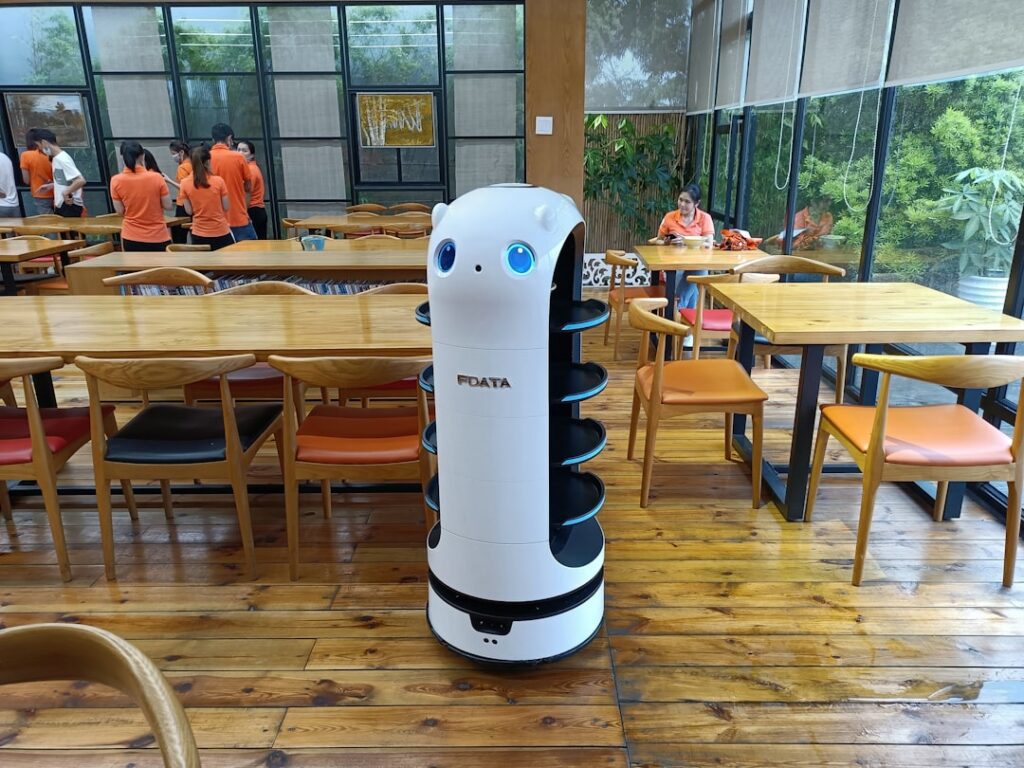
The integration of swarm intelligence principles into autonomous logistics systems represents a significant development in robotics. This field, often referred to as the “Robotics Revolution: Swarm Intelligence in Autonomous Logistics,” focuses on designing and deploying groups of simple robots that, through local interactions, achieve complex global objectives. This article will explore the foundational concepts, technological advancements, practical applications, and the inherent challenges and future directions of this emerging paradigm.
Swarm robotics draws inspiration from biological systems, particularly insect colonies. Individual ants or bees, despite their limited cognitive abilities, collectively exhibit sophisticated behaviors such as foraging, nest building, and predator evasion. This collective intelligence, or “swarm intelligence,” emerges from decentralized control and local communication rather than centralized command.
Decentralized Control
Unlike traditional industrial robots that often operate under a master-slave architecture, swarm robots function autonomously. Each robot makes decisions based on its own sensors and a set of simple rules, without direct instruction from a central unit. This decentralization offers inherent robustness; the failure of a single robot does not cripple the entire system, much like the loss of a few ants does not collapse an ant colony. This resilience is a key advantage in dynamic logistic environments where unforeseen events are common.
Local Communication
Communication within a swarm is primarily local, meaning robots interact only with their immediate neighbors. This can be achieved through various mechanisms, including direct radio links, optical signals, or even by modifying the environment (e.g., pheromone trails left by ants). Limiting communication range reduces bandwidth requirements and diminishes the single point of failure associated with a central communication hub. This localized interaction is akin to a ripple effect, where a small perturbation in one area can propagate through the entire swarm.
Emergent Behavior
The most remarkable characteristic of swarm intelligence is emergent behavior. Complex, system-level goals are achieved not through explicit programming of desired outcomes for each robot, but through the cumulative effect of simple, local interactions. For instance, in a warehouse, individual robots following a simple “move towards nearest unpicked item” rule might collectively achieve efficient item collection, without any single robot being “aware” of the overall collection target. This emergent property is what allows swarms to tackle problems that would be too complex or computationally intensive for a single robot or a centrally controlled system.
In exploring the advancements in autonomous logistics, a related article titled “The Future of Supply Chain Management: Integrating Robotics and AI” provides valuable insights into how emerging technologies are reshaping the industry. This article delves into the role of robotics and artificial intelligence in optimizing supply chain operations, complementing the themes discussed in “Robotics Revolution: Swarm Intelligence in Autonomous Logistics.” For further reading, you can access the article [here](https://brainng.one/login/).
Technological Enablers and Advancements
The practical realization of swarm intelligence in autonomous logistics has been driven by several key technological advancements. Miniaturization, improved sensor technology, and more sophisticated algorithms have all contributed to the viability of these systems.
Miniaturization and Cost Reduction
The development of smaller, lighter, and more energy-efficient components has made it economically feasible to deploy large numbers of robots. Microcontrollers, power sources, and actuators have all undergone significant miniaturization. This allows for the creation of compact and agile robots, often referred to as “bots” or “agents,” capable of navigating confined spaces within warehouses or distribution centers. The decreasing cost of these components also lowers the barrier to entry, making swarm-based solutions more attractive to businesses of varying scales.
Advanced Sensing and Perception
Sophisticated sensors are crucial for decentralized decision-making. Lidar, cameras, ultrasonic sensors, and RFID readers provide robots with information about their surroundings, including the location of other robots, obstacles, and items to be moved. The ability to accurately perceive the environment allows robots to react dynamically to changes and avoid collisions, which is paramount in a shared workspace. Think of these sensors as the eyes and ears of the swarm, providing each individual with its unique perspective on the world.
Communication and Networking Protocols
While communication is local, robust and efficient networking protocols are essential. Wireless technologies like Wi-Fi, Bluetooth, and newly emerging low-power wide-area network (LPWAN) technologies enable inter-robot communication. The design of these protocols must account for message redundancy, collision avoidance, and the ability to scale with increasing swarm size. The development of ad-hoc networking capabilities further enhances the resilience of these systems, allowing robots to establish communication links on the fly without relying on a pre-existing infrastructure.
Algorithms for Swarm Coordination
The heart of swarm intelligence lies in its algorithms. These algorithms define the simple rules that govern individual robot behavior and lead to emergent collective intelligence. Examples include:
Foraging Algorithms
Inspired by ant foraging, these algorithms guide robots to search for, collect, and transport items. Robots might use a “pheromone-like” mechanism, leaving digital markers that indicate the presence of items or efficient paths.
Path Planning and Collision Avoidance
To navigate complex environments, robots employ local path planning algorithms that prioritize avoiding collisions with other robots, obstacles, and human workers. These algorithms often involve reactive behaviors, allowing robots to adjust their trajectories in real-time. This is like a crowd of people moving through a busy street, each adjusting their path to avoid bumping into others.
Task Allocation and Load Balancing
In logistics, tasks need to be distributed among the robots efficiently. Algorithms for task allocation aim to balance the workload, ensuring that no single robot is overburdened and that all tasks are completed in a timely manner. This might involve robots “bidding” for tasks or dynamically adjusting their assignments based on their current location and availability.
Applications in Autonomous Logistics
Swarm intelligence in autonomous logistics is transforming various aspects of the supply chain, from warehousing to last-mile delivery.
Warehouse Automation
Warehouses and distribution centers are prime candidates for swarm robot deployment. They offer structured environments and repetitive tasks suitable for automation.
Order Picking and Fulfillment
Instead of a single large robot retrieving items, swarms of smaller robots can navigate aisles, locate specific products, and transport them to a packing station. This significantly reduces travel time for each individual robot and increases throughput. Imagine a vast library where individual librarians, instead of one giant robot librarian, quickly fetch books from different sections simultaneously.
Inventory Management
Swarm robots equipped with RFID readers or cameras can continuously monitor inventory levels, identify misplaced items, and perform automated stocktakes. This provides real-time data, improving accuracy and reducing manual errors.
Dynamic Storage and Retrieval
In highly dynamic warehouses, swarm robots can adapt to changing storage needs, moving items to optimal locations based on demand patterns or seasonal fluctuations. This level of flexibility is difficult to achieve with fixed automation systems.
Last-Mile Delivery
The final leg of the delivery process, known as “last-mile delivery,” presents unique challenges due to urban congestion and varied terrain. Swarm robotics offers potential solutions.
Collaborative Delivery
Miniature delivery robots could work in conjunction, covering a wider area and delivering multiple packages simultaneously. One robot might handle a specific neighborhood, while another tackles a different zone, optimizing delivery routes.
Adaptive Route Planning
Swarm robots can dynamically adjust their routes in real-time based on traffic conditions, road closures, or even weather patterns, improving delivery efficiency and predictability. This is like a fleet of taxis sharing real-time traffic information to navigate city streets more effectively.
Material Handling in Manufacturing
Beyond warehousing, swarm robotics is also finding applications in manufacturing environments for material handling.
Component Transportation
Swarms of automated guided vehicles (AGVs) can transport components between different workstations on a factory floor, ensuring a continuous flow of materials and reducing bottlenecks.
Flexible Production Lines
The adaptability of swarm robots allows for greater flexibility in manufacturing. Production lines can be reconfigured more easily, as robots can be redeployed to different tasks or areas as needed.
Challenges and Future Directions

Despite the promise of swarm intelligence in autonomous logistics, several challenges remain. Addressing these will be crucial for widespread adoption.
Robustness and Fault Tolerance
While decentralized control offers inherent robustness, designing algorithms that guarantee system-wide performance even with significant robot failures is complex. Ensuring that the swarm can recover gracefully from unexpected events, such as a robot malfunctioning or getting stuck, is a critical area of research. This includes mechanisms for self-healing and dynamic task re-assignment.
Scalability and Heterogeneity
Managing increasingly large swarms (hundreds or thousands of robots) presents computational and communication challenges. Furthermore, integrating heterogeneous swarms—robots with different capabilities and functionalities—demands sophisticated coordination mechanisms. How do you orchestrate a symphony when each musician plays a different instrument and follows slightly different rules?
Human-Robot Interaction
As swarms become more prevalent in working environments, ensuring safe and efficient human-robot interaction is paramount. This involves developing intuitive interfaces for human operators, creating clear communication protocols between humans and robots, and designing robots with social intelligence that allows them to navigate around human workers without causing disruption or alarm. This isn’t just about avoiding collisions, but about fostering trust and seamless collaboration.
Security and Privacy
Like any networked system, swarm robotics is vulnerable to cyber threats. Protecting communication channels, ensuring data integrity, and preventing unauthorized access to the swarm’s control systems are crucial for maintaining operational integrity and preventing malicious exploitation. Imagine a hacker taking control of a portion of the swarm; the consequences could be severe.
Ethical and Societal Implications
The rise of autonomous systems raises ethical questions regarding job displacement, accountability in case of accidents, and the responsible use of surveillance capabilities. Open discussions and careful regulation will be necessary to navigate these complex issues. We must ensure that these technological advancements serve humanity and do not inadvertently create new societal problems.
Energy Management and Battery Life
For continuous operation, efficient energy management is critical. Research into longer-lasting batteries, wireless charging solutions, and energy-aware task allocation algorithms will be essential for maximizing the operational uptime of swarm robots.
The “Robotics Revolution: Swarm Intelligence in Autonomous Logistics” is not a distant future but a present reality actively being shaped by ongoing research and development. The collective intelligence of simple, interacting robots offers a powerful paradigm for solving complex logistical challenges. As technology progresses and researchers tackle the remaining obstacles, we can expect to see swarm robotics play an increasingly vital role in streamlining supply chains and transforming the way goods are moved and managed globally. The future of logistics may well be a bustling ballet of tiny, intelligent machines.