


This article examines the field of swarm robotics, focusing on its application in achieving scalable and resilient operations.
Swarm robotics draws inspiration from the collective behavior observed in natural systems, such as ant colonies, bee hives, and bird flocks. These systems demonstrate the ability to achieve complex tasks through the interaction of numerous simple agents, each possessing limited individual capabilities. In the context of robotics, a swarm is a collection of autonomous or semi-autonomous robots that collaborate to achieve a common goal. The core principle is that the collective behavior of the swarm emerges from the local interactions of individual robots, rather than from a centralized control system dictating the actions of each unit.
The Foundation: Decentralized Control and Emergent Behavior
Central to swarm robotics is the concept of decentralized control. Unlike traditional robotic systems that often rely on a single, powerful controller, swarm robots operate with distributed decision-making. Each robot makes choices based on its immediate environment and simple rules. This distributed nature makes the system inherently fault-tolerant. If one or even several robots fail, the swarm can often continue to function, albeit potentially with reduced efficiency. The intelligence is not vested in any single robot but emerges from the aggregate interactions of all members. Imagine a flock of birds; no single bird directs the entire flock’s movement, yet complex aerial maneuvers are executed seamlessly. This emergent behavior is a hallmark of swarm systems.
Individual Agent Characteristics: Simplicity as a Strength
The individual robots within a swarm are typically designed to be simple, inexpensive, and capable of performing only a limited set of actions. This simplicity is not a limitation but a strategic design choice. By reducing the complexity of each agent, the overall system complexity can be managed, and the cost of deploying a large number of robots is minimized. These robots often possess basic sensing capabilities (e.g., proximity sensors, light sensors), simple actuation (e.g., for movement and basic manipulation), and limited onboard processing power. Their strength lies in their numbers and ability to cooperate.
Communication and Interaction: The Language of the Swarm
Effective communication and interaction are crucial for swarm coordination. This can manifest in various forms, including:
Direct Communication: Radio Waves and Infrared Signals
Some swarm systems employ direct communication channels, where robots exchange information wirelessly. This can be achieved through radio frequency signals, infrared, or other short-to-medium range communication protocols. The data exchanged is typically simple, such as proximity to other robots, environmental readings, or task status updates. The design of communication protocols is vital to avoid information overload and ensure efficient data transfer within the swarm.
Indirect Communication: Stigmergy and Environmental Modification
A more subtle form of communication, known as stigmergy, is prevalent in nature and emulated in swarm robotics. Stigmergy involves indirect communication through the modification of the environment. For example, an ant might leave a pheromone trail that other ants can follow. In robotic systems, this could involve robots leaving markers, altering terrain properties, or depositing information in designated locations. This method is particularly useful for tasks involving exploration, mapping, and resource gathering, where robots can leave traces of their activities for others to interact with.
The Swarm as a Meta-Organism: A New Paradigm for Operations
The collective behavior of the swarm can be viewed as the emergence of a “meta-organism,” a system greater than the sum of its individual parts. This meta-organism possesses attributes that individual robots lack, such as robustness, scalability, and adaptability. Understanding this shift in perspective is fundamental to appreciating the potential of swarm robotics.
In the context of advancements in swarm robotics, the article “Robotics Revolution: Swarm Robotics for Scalable and Resilient Operations” highlights the innovative approaches being developed to enhance operational efficiency through collaborative robotic systems. For those interested in exploring further developments in this field, you can check out a related article that discusses the implications of these technologies on various industries and their potential to revolutionize operations. To read more, visit this link.
Scalability: Expanding Horizons Through Numbers
The inherent scalability of swarm robotics is a significant advantage, allowing for the adaptation of operations to match the scope of a given problem. A small swarm can tackle a localized task, while a larger swarm can be deployed for more extensive projects without a proportional increase in control system complexity.
Task Decomposition and Parallelization
Swarm systems excel at tasks that can be broken down into smaller, independent sub-tasks. This allows for parallel execution, drastically reducing the overall time required to complete a complex operation. Consider a search and rescue scenario covering a large area; a swarm of drones can systematically survey different sectors simultaneously, accelerating the search process.
Resource Allocation and Reconfiguration
Scalability also extends to the ability of a swarm to adapt its size based on available resources or changing task demands. If a task requires more widespread coverage, a larger number of robots can be deployed. Conversely, if a task becomes more localized, a subset of the swarm can be spun off for that purpose, leaving the remainder free for other duties. This dynamic reconfiguration is a key strength.
Addressing Large-Scale Environments
For applications spanning vast geographical areas or requiring simultaneous monitoring of numerous points, the scalability of swarm robotics proves invaluable. This could include large-scale environmental monitoring, precision agriculture across vast fields, or distributed sensor networks for infrastructure surveillance. The ability to deploy hundreds or even thousands of agents allows for unprecedented coverage and data acquisition.
Cost-Effectiveness of Large Deployments
While the initial investment in developing swarm technology may exist, the cost-effectiveness of deploying large numbers of simple robots outweighs the expense of a few highly complex and expensive robots for many large-scale tasks. The mass production of standardized, less complex robots can drive down individual unit costs, making widespread deployment economically feasible.
Resilience: Bouncing Back from Failures
Resilience is a cornerstone of swarm robotics, enabling the system to continue functioning effectively even in the face of individual robot failures. This robustness is achieved through redundancy and distributed decision-making.
Fault Tolerance through Redundancy
The presence of multiple robots performing similar functions inherently provides redundancy. If one robot malfunctions, others can pick up its slack. This is analogous to a biological system where the loss of a few cells does not typically lead to system-wide failure. This redundancy ensures that the overall mission objectives are not jeopardized by isolated incidents.
Graceful Degradation: Maintaining Functionality
Instead of catastrophic failure, swarm systems often exhibit “graceful degradation.” This means that as robots fail, the swarm’s performance might decrease, but it will not cease to operate entirely. The degree of degradation depends on the task at hand and the number of failures. This is a crucial characteristic for safety-critical applications.
Adaptability to Dynamic and Uncertain Environments
Swarm robots are often deployed in environments that are dynamic, unpredictable, and potentially hazardous. Their decentralized nature and reliance on local sensing and simple rules allow them to adapt to unforeseen circumstances and navigate challenges that might cripple a centralized system. For instance, a swarm operating in a disaster zone would need to cope with debris, shifting terrain, and unpredictable obstacles.
Self-Healing and Recovery Mechanisms
Advanced swarm systems can incorporate self-healing or recovery mechanisms. This could involve robots detecting failures in neighboring robots and attempting to compensate, or even basic repair capabilities for minor issues. While full self-repair is complex, the ability to adapt to and mitigate the impact of failures is a key aspect of resilience.
Applications of Swarm Robotics: From Exploration to Execution
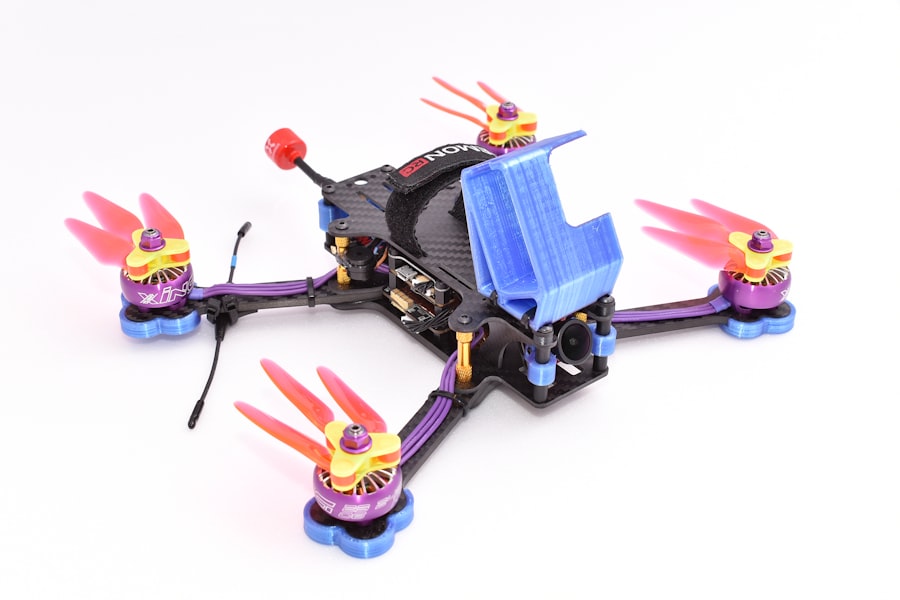
The unique characteristics of swarm robotics lend themselves to a wide range of applications across various domains. The ability to scale operations and maintain resilience makes them suitable for tasks that are too dangerous, too large, or too complex for traditional robotic solutions.
Environmental Monitoring and Surveillance
Swarm robots, particularly drones and ground-based sensors, can be deployed for extensive environmental monitoring. This includes tasks like pollution detection, wildlife tracking, forest fire detection and mapping, and agricultural monitoring for crop health and yield prediction. The widespread coverage and continuous data collection capabilities of a swarm are ideal for these applications.
Mapping and Exploration of Uncharted Territories
In situations where navigating unknown or dangerous territories is required, swarms offer a robust solution. They can explore caves, underwater environments, or extraterrestrial landscapes, building detailed maps and identifying points of interest. The redundancy ensures that even if some explorers are lost, the mission can continue.
Disaster Response and Search and Rescue
Following natural disasters or man-made incidents, swarms of robots can be rapidly deployed to assist in search and rescue operations, assess damage, and deliver essential supplies. Their ability to cover large areas quickly and operate in hazardous conditions without risking human lives is a major advantage.
Industrial and Agricultural Operations
Swarm robotics is finding utility in optimizing industrial processes and agricultural practices.
Precision Agriculture and Crop Management
The deployment of coordinated ground robots or aerial drones can lead to highly precise agricultural interventions. This includes targeted irrigation, automated weed removal, and precise application of fertilizers and pesticides, leading to increased efficiency and reduced environmental impact.
Warehouse Automation and Logistics
In large warehouses, swarms of robots can efficiently manage inventory, transport goods, and optimize pick-and-pack operations, enhancing speed and accuracy.
Scientific Research and Exploration
Beyond practical applications, swarms are valuable tools for scientific discovery. This includes deploying underwater robot swarms for oceanographic research, or using aerial swarms to study atmospheric phenomena.
In exploring the advancements in swarm robotics, one can gain further insights by reading a related article that discusses the implications of these technologies for various industries. This article delves into how swarm robotics can enhance operational efficiency and resilience in complex environments. For those interested in understanding the broader context of these innovations, you can find more information in this related article that highlights the potential applications and future developments in the field.
Challenges and Future Directions: Paving the Path Forward
| Metric | Description | Value / Range | Unit |
|---|---|---|---|
| Number of Robots in Swarm | Typical size of robot groups operating collaboratively | 10 – 1000+ | Units |
| Communication Range | Maximum effective distance for inter-robot communication | 10 – 100 | meters |
| Task Completion Time | Average time for swarm to complete assigned task | 5 – 60 | minutes |
| Fault Tolerance | Percentage of robots that can fail without impacting mission | 20 – 40 | % |
| Energy Consumption per Robot | Average power usage during operation | 5 – 20 | Watts |
| Scalability Factor | Efficiency retention as swarm size increases | 80 – 95 | % |
| Autonomy Level | Degree of independent decision-making capability | High | Qualitative |
| Deployment Environments | Types of environments where swarm robotics are effective | Indoor, Outdoor, Hazardous, Underwater | Categories |
Despite the significant advancements, several challenges remain in the widespread adoption and further development of swarm robotics. Addressing these challenges will unlock even greater potential for this technology.
Control Complexity and Coordination Algorithms
Developing sophisticated algorithms that enable seamless coordination among a large number of agents, especially in dynamic environments, is an ongoing research area. Ensuring that the swarm’s collective behavior is predictable, efficient, and aligned with mission objectives requires advanced computational approaches.
Real-time Decision Making Under Uncertainty
Swarm robots must be able to make rapid decisions in the face of incomplete or uncertain information. Developing robust decision-making frameworks that can adapt to unexpected events is crucial for real-world deployment.
Inter-Swarm Communication and Collaboration
As the complexity of tasks increases, the need for multiple swarms to collaborate might arise. Establishing effective communication protocols and coordination strategies between different swarms presents a new set of challenges.
Hardware Limitations and Energy Management
The individual robots in a swarm often have limited power sources and computational capabilities. Optimizing energy efficiency and developing robust hardware that can withstand harsh environments are critical considerations.
Battery Life and Charging Infrastructure
For extended operations, managing battery life and establishing efficient charging or power-replenishment infrastructure for large swarms are significant logistical hurdles.
Ethical and Societal Implications
As swarm robotics becomes more prevalent, ethical considerations regarding their autonomy, accountability, and potential impact on employment need careful consideration and public discourse.
Security and Robustness Against Malicious Attacks
Ensuring that swarm systems are secure against hacking or malicious manipulation is paramount, especially in critical infrastructure or defense applications.
Research Frontiers and Emerging Technologies
The field of swarm robotics is continuously evolving, with exciting research frontiers and emerging technologies poised to shape its future.
Human-Swarm Interaction and Collaboration
The ability for humans to effectively interact with and direct swarm operations is a key area of research, moving towards seamless collaboration rather than just remote control.
Integration with Artificial Intelligence and Machine Learning
The application of advanced AI and machine learning techniques holds the promise of endowing swarms with greater adaptability, learning capabilities, and more sophisticated emergent behaviors. This could lead to swarms that can learn from their experiences and collectively optimize their strategies over time.
Swarms of Swarms: Hierarchical and Meta-Swarm Systems
The concept of “swarms of swarms” or meta-swarm systems, where multiple independent swarms coordinate under a higher-level control structure, represents a further evolution towards massively scalable and complex operations. This hierarchical approach can manage the complexity of very large-scale deployments.
In conclusion, swarm robotics, with its emphasis on scalability and resilience through decentralized control and emergent behavior, represents a paradigm shift in how we approach complex operational challenges. By drawing inspiration from nature and leveraging advancements in robotics and artificial intelligence, swarm systems are poised to revolutionize industries and scientific exploration in the years to come.