

The development of dexterous humanoid hands represents a significant milestone in the field of robotics. These artificial appendages, designed to mimic the multifaceted capabilities of the human hand, are no longer confined to science fiction. They are becoming increasingly sophisticated, enabling robots to interact with their environment in ways previously unimaginable. This evolution is driven by the fundamental human need to create tools that can perform complex tasks, extend our reach, and assist us in various domains.
The initial attempts at creating robotic hands were characterized by simplicity and a focus on basic manipulation. These early designs were akin to rudimentary tools, designed for specific, often repetitive, tasks. The emphasis was on robust functionality rather than nuanced dexterity.
The Age of the Simple Gripper
In the early days of industrial automation, robotic hands were largely utilitarian. Think of them as the mechanical equivalent of a vise or a simple pincer. Their primary function was to grasp and hold objects – a function that was revolutionary in its time for factory assembly lines. These grippers were often designed with few degrees of freedom, meaning they could move in a limited number of directions.
- Fixed Jaw Grippers: These were the workhorses of early automation. They featured two opposing jaws that would close with a predetermined force. While effective for handling uniform objects, they lacked the adaptability needed for varied shapes and sizes.
- Vacuum Grippers: For lighter, flatter objects, vacuum grippers offered a solution. By creating a suction, they could lift and move items without direct physical contact. This was particularly useful for handling delicate materials or large, flat surfaces like glass.
- Magnetic Grippers: Similar to vacuum grippers in their non-contact approach, magnetic grippers were ideal for ferrous materials. They provided a strong hold for metal components, streamlining assembly processes.
The limitations of these early designs became apparent as the complexity of manufacturing and other applications grew. The inability to handle a diverse range of objects, to adjust grip force subtly, or to perform delicate manipulations meant that human intervention was still required for many tasks. These early grippers were the mechanical equivalent of a blunt instrument; they could get the job done, but lacked finesse.
The Quest for Multi-Fingered Designs
The realization that the human hand’s dexterity stemmed from its multiple fingers, each with its own range of motion and articulation, spurred the development of more complex robotic hand designs. This marked a shift from simple gripping mechanisms to imitative biomechanics.
- Two-Finger Dexterity: Early multi-fingered hands often incorporated just two digits. This was a stepping stone, allowing for a more encompassing grip than single-jawed grippers. It enabled a slightly greater range of object manipulation, but still fell far short of human capability.
- The Introduction of Three Fingers: The addition of a third finger brought a significant improvement. This allowed for more stable grasping and the ability to perform rudimentary rotations of objects. It was like moving from a two-tined fork to a three-tined one – a subtle but important increase in utility.
- The Challenge of Finger Actuation: One of the primary challenges in these early multi-fingered designs was the actuation of each individual finger. Early systems often relied on complex arrangements of wires, pulleys, and motors, leading to bulky and unreliable mechanisms. The sheer number of actuators required to control multiple fingers with multiple joints presented a significant engineering hurdle.
These early multi-fingered designs were akin to learning to walk – a crucial developmental stage, but far from graceful or fully capable. They demonstrated the potential of a more anthropomorphic approach but highlighted the engineering complexities involved.
In exploring the advancements in robotics, particularly in the development of dexterous humanoid hands, it is insightful to consider the broader implications of these technologies on society and industry. A related article that delves into the foundational aspects of robotics and its transformative potential can be found at BrainNG. This resource provides a comprehensive overview of the ongoing innovations in robotics, highlighting how they are reshaping various sectors and enhancing human capabilities.
The Rise of Anthropomorphic Designs
As robotic technology advanced, so did the ambition to replicate the human hand with greater fidelity. This led to a focus on anthropomorphic designs, closely mirroring the structure and kinematics of the human hand, with the goal of achieving comparable dexterity.
Mimicking Human Anatomy
The anatomical intricacies of the human hand, with its complex arrangement of bones, muscles, and tendons, became a blueprint for advanced robotic hands. Researchers began to dissect the mechanics of human touch and manipulation.
- The Palm and Finger Structure: Researchers studied how the metacarpals and phalanges in the human hand work in concert. This led to the incorporation of a palm structure in robotic hands and fingers, each with multiple joints (metacarpophalangeal, proximal interphalangeal, and distal interphalangeal joints) that could flex and extend.
- The Role of the Thumb: The opposable thumb is a defining feature of human dexterity. Its ability to rotate and oppose the other fingers is crucial for grasping. Early anthropomorphic designs focused intensely on replicating this crucial functionality, experimenting with various degrees of freedom for the thumb.
- Tendon-Driven Systems: Inspired by human anatomy, tendon-driven systems became a popular approach. These systems use cables, analogous to tendons, to transmit force from actuators (motors) to the finger joints. This allowed for more compact finger designs and a more natural range of motion. However, it also introduced complexities in cable routing and tension management.
These designs were like creating an anatomical model, carefully replicating each bone and joint to understand how the whole system functions. The focus was on structure and potential movement, laying the groundwork for more advanced functional capabilities.
Degrees of Freedom: The Key to Dexterity
The number of degrees of freedom (DOF) in a robotic hand is a direct indicator of its potential dexterity. Each DOF represents an independent way in which a joint can move. A greater number of DOFs allows for more complex and nuanced movements.
- Individual Finger Actuation: The goal was to actuate each finger independently, allowing it to bend, extend, and even twist. This level of control is essential for replicating the intricate movements of the human hand.
- The Thumb’s Significance: The thumb, with its multiple DOFs, is particularly crucial. It can rotate around its carpometacarpal joint, allowing it to pivot and oppose the other fingers. This is often the most complex part of a robotic hand to replicate.
- Achieving Full Human Hand DOF: A fully articulated human hand has around 20-30 degrees of freedom. Replicating this in a robotic hand is a significant challenge, often involving trade-offs between complexity, cost, and reliability. Many advanced robotic hands aim to achieve a substantial portion of this, focusing on the most critical DOFs for common tasks.
The pursuit of higher degrees of freedom was like unlocking more tools in a toolbox. Each new movement capability expanded the range of tasks the robotic hand could perform, moving it closer to human-like versatility.
Advanced Sensing and Control

Beyond mechanical replication, the evolution of dexterous humanoid hands has been heavily influenced by advancements in sensing and control systems. These systems allow robotic hands to not only move but also to perceive and interact with their environment intelligently.
Tactile Sensing: The Sense of Touch
Tactile sensing provides robots with information about physical contact, pressure, texture, and even temperature. This allows them to respond to their environment in a more nuanced and adaptive way.
- Pressure Sensors: These are fundamental to tactile sensing, providing feedback on how hard the hand is gripping an object. This is crucial for avoiding crushing delicate items or losing grip on heavier ones.
- Shear Force Sensors: These sensors detect forces that are parallel to the surface of the sensor. This is important for tasks like sliding an object or maintaining friction during manipulation.
- Texture and Slip Detection: More advanced tactile sensors can discern surface textures and detect slippage. This enables robots to adapt their grip in real-time, preventing dropped objects. Imagine trying to pick up a wet glass – you instinctively adjust your grip. Tactile sensors allow robots to do something similar.
- Integration of Vision with Touch: Combining visual information with tactile feedback creates a more robust perception system. A robot can “see” an object and then use its tactile sensors to refine its grip and manipulate it with greater precision.
Tactile sensing is the robotic hand’s pathway to “feeling” the world. Without it, the hand is operating blind, relying solely on pre-programmed movements. With it, the hand gains a crucial layer of awareness.
Force and Torque Control: The Art of Gentle and Firm Grasping
Precise control over grip force and torque is essential for performing a wide range of tasks, from delicately holding an egg to firmly turning a bolt.
- Force Feedback: Systems that incorporate force feedback allow the robot to sense the resistance it encounters when gripping or manipulating an object. This information can be used to adjust the motor commands, ensuring the correct amount of force is applied.
- Impedance Control: This advanced control strategy allows the robot’s hand to behave in a compliant or stiff manner, depending on the task. For example, when inserting a peg into a hole, the hand might need to be compliant to allow for slight misalignment. When holding a heavy object, it would need to be stiff to maintain a secure grip.
- Adaptive Gripping Strategies: Based on sensory input, robotic hands can employ adaptive gripping strategies. If a slip is detected, the system can automatically increase grip force or adjust finger positions. This is akin to a human instinctively tightening their grip when they feel something slipping.
Force and torque control are the subtle nuances of the robotic hand’s interaction with the world. They allow it to move beyond brute force and engage in delicate and precise operations.
Applications and Impact
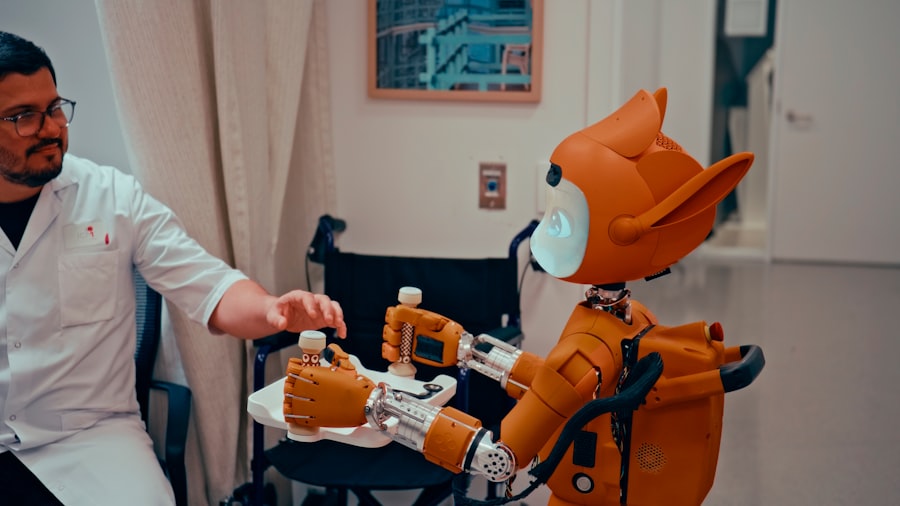
The increasing dexterity of humanoid hands is opening doors to a wide array of applications, transforming various industries and promising significant societal benefits.
Industrial Automation and Manufacturing
In factories, dexterous hands are taking on more complex assembly and manipulation tasks, moving beyond the simple pick-and-place operations of earlier robots.
- Delicate Assembly: Robots with dexterous hands can now assemble intricate electronic components, handle fragile materials, and perform delicate soldering tasks that previously required human precision. This reduces errors and improves product quality.
- Goods Handling and Logistics: In warehouses, these hands can pick and sort a wider variety of items, including those with irregular shapes or requiring specific handling. This streamlines order fulfillment and reduces the physical strain on human workers.
- Human-Robot Collaboration (Cobots): Dexterous hands are crucial for collaborative robots that work alongside humans on assembly lines. Their ability to perform complex gestures and react safely to human presence enhances the efficiency and safety of these workspaces. Imagine a robot handing a tool to a human worker with precision and care – that’s the promise of dexterous hands in cobotics.
The impact on industry is akin to upgrading from simple tools to a full set of specialized instruments. It allows for greater precision, efficiency, and the tackling of more complex manufacturing challenges.
Healthcare and Rehabilitation
The medical field is a significant beneficiary of advancements in dexterous robotic hands, offering new possibilities for patient care and recovery.
- Surgical Robotics: While not always strictly humanoid hands, robotic surgical systems often incorporate highly dexterous manipulators that can perform intricate surgical procedures with enhanced precision and minimal invasiveness. These can reach areas inaccessible to human surgeons and operate with greater steadiness than a human hand.
- Prosthetics and Assistive Devices: The development of advanced robotic hands is directly leading to more sophisticated and functional prosthetic limbs. These prosthetics can offer a near-human level of dexterity, allowing amputees to perform everyday tasks with greater independence.
- Rehabilitation Robotics: Robotic devices with dexterous hands are being used in physical therapy to help patients regain motor skills after strokes or other injuries. These devices can provide controlled and repetitive exercícios, accelerating the recovery process.
In healthcare, dexterous hands represent a leap forward in restoring function and enabling new forms of treatment. They offer hope for improved patient outcomes and greater quality of life.
Exploration and Hazardous Environments
The ability of robots to perform complex tasks in challenging conditions is invaluable for exploration and operations in dangerous environments.
- Space Exploration: Robotic hands on space probes and rovers can perform scientific experiments, collect samples, and conduct repairs in environments where human access is impossible. Their dexterity allows for detailed examination of extraterrestrial samples.
- Disaster Response and Bomb Disposal: Robots equipped with dexterous hands can navigate collapsed structures, defuse explosives, and handle hazardous materials, minimizing risk to human personnel. They are the remote hands that can venture where humans cannot.
- Deep Sea Exploration: Similar to space, robotic manipulators are essential for exploring the ocean depths, collecting specimens, and performing maintenance on underwater infrastructure.
In these extreme scenarios, dexterous robotic hands act as the extension of human will and capability, allowing us to interact with and understand environments that would otherwise remain inaccessible.
In exploring the advancements in robotics, particularly in the development of dexterous humanoid hands, one can gain further insights from a related article that delves into the integration of artificial intelligence in robotic systems. This article highlights how AI enhances the functionality and adaptability of robotic hands, making them more efficient in performing complex tasks. For a deeper understanding of this fascinating intersection of technology, you can read more about it in this related article.
Future Directions and Challenges
| Year | Robotic Hand Model | Degrees of Freedom (DoF) | Grip Types | Material | Control Method | Notable Feature |
|---|---|---|---|---|---|---|
| 1986 | Stanford/JPL Hand | 9 | Power Grip | Aluminum | Basic Servo Control | First multi-fingered robotic hand |
| 1998 | Shadow Dexterous Hand | 20 | Precision & Power Grips | Carbon Fiber & Aluminum | Advanced Servo & Pneumatic | High dexterity with tactile sensors |
| 2010 | Robonaut 2 Hand | 12 | Multiple Grips | Lightweight Alloys | Neural Network Control | Designed for space applications |
| 2018 | OpenAI Five Hand | 24 | Complex Manipulation | Composite Materials | Reinforcement Learning | AI-driven dexterous manipulation |
| 2023 | Agility Robotics Hand | 22 | Adaptive Grips | Soft Robotics Materials | Hybrid AI & Sensor Fusion | Enhanced adaptability and sensitivity |
Despite remarkable progress, the journey towards truly human-like dexterous robotic hands is ongoing. Several key areas represent the next frontier, alongside persistent engineering challenges.
Towards Biomimetic Dexterity
The ultimate goal for many researchers is to achieve a level of dexterity that is indistinguishable from that of a human hand. This involves not only replicating the mechanics and sensing but also the intuitive control and learning capabilities.
- Softer Robotics and Actuation: Current robotic hands are often rigid. The development of “soft robotics,” using compliant materials and fluidic actuation, aims to create hands that are more adaptable, safer for human interaction, and capable of more delicate manipulations. Imagine a hand that can conform to the shape of any object, like a human hand does.
- Advanced Materials and Fabrication: New materials with properties similar to human skin and tissues – such as sensing capabilities, self-healing, and flexibility – are being developed. Advanced fabrication techniques like 3D printing are enabling the creation of increasingly complex and customized robotic hand components.
- Neuromorphic Control and AI Integration: The integration of advanced artificial intelligence, particularly neuromorphic computing which mimics the structure and function of the human brain, is seen as a crucial step towards achieving more intuitive and adaptive robotic hand control. This could lead to robots that learn to perform new tasks with greater speed and less explicit programming.
This next phase is about moving beyond mere imitation and seeking to capture the essence of human touch and manipulation – the subtle reflexes, the intuitive understanding of force, and the adaptability of human movement.
The Persistent Engineering Hurdles
Despite advancements, significant challenges remain in the design, manufacturing, and integration of dexterous robotic hands.
- Power and Miniaturization: Providing sufficient power to numerous actuators while keeping the hand size compact and lightweight remains a significant engineering task. The sheer number of motors and their attendant power requirements can be substantial.
- Durability and Maintenance: Robotic hands, especially those with many moving parts and complex sensors, can be prone to wear and tear. Ensuring their long-term durability and ease of maintenance is crucial for practical deployment.
- Cost of Production: The intricate nature of dexterous hands often leads to high manufacturing costs, which can limit their widespread adoption in consumer or less high-margin industrial applications. Making these sophisticated hands more affordable is a key factor in their future accessibility.
- Standardization and Interoperability: A lack of standardized interfaces and communication protocols can hinder the integration of different robotic hand systems with various robot platforms and control software. This can be like trying to connect different brands of electrical plugs without an adapter.
Addressing these engineering challenges is akin to refining a complex engine. It’s about making the technology more robust, more efficient, and ultimately, more accessible to a wider range of users and applications. The evolution of dexterous humanoid hands is a testament to human ingenuity, transforming our ability to interact with and shape the world around us.